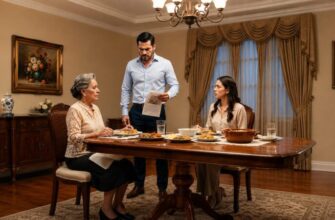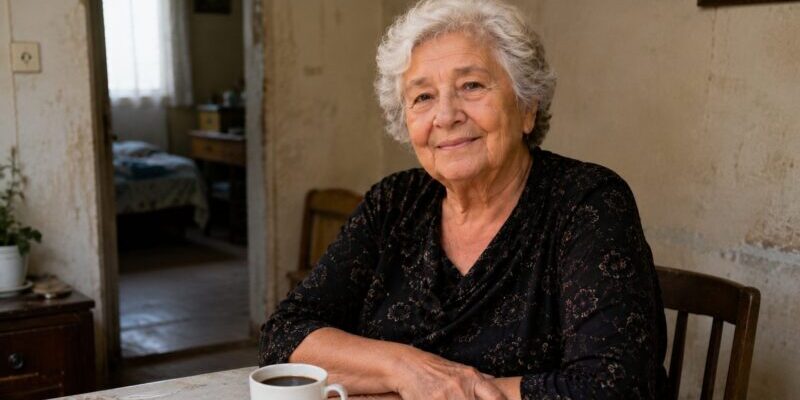
The mother had not visited her children’s homes for three years, waiting for at least one of them to say, “Mom, come over to
our place”… but when they finally remembered her, it was already too late 😭💔
For three years, Grandma Miriam had not gone to her children’s homes. Not because she was angry in the way people get
upset and then forget. Her pain was silent. Old, heavy, hidden deep inside her heart.
She had three children — two sons and one daughter. All of them lived in the city. They had nice homes, cars, jobs, families.
Sometimes they called. More accurately, they called on holidays, on her birthday, or when they needed some document.
Miriam always answered the same way.
“I’m fine, my dear. How are you?”
Whenever one of the children said, “Mom, we’ll come soon,” she would smile, press the phone to her chest, and start
cleaning the house.
She wiped the table. She took jam from the old cupboard. But no one came. The first year, she made excuses for them.
“They are busy.”
The second year, she still believed.
“The children have grown up. Life has become difficult.”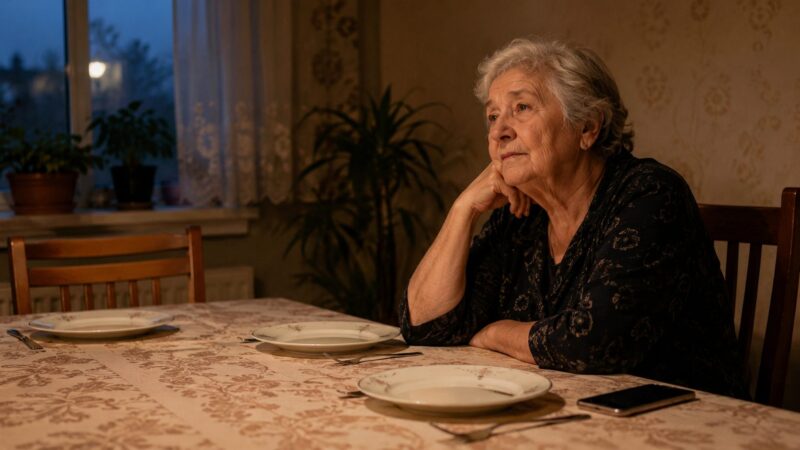
By the third year, she no longer said anything. Every Sunday morning, she simply cooked a meal, placed three extra plates on
the table, and waited. Her neighbor, Anna, saw that table every time and said,
“Mother Miriam, why are you hurting yourself like this? Call them. Tell them to come.”
Miriam would smile gently.
“A mother does not force herself into her child’s home, my girl. A mother is invited.”
“But maybe they think you don’t want to go.”
At those words, Miriam would fall silent for a moment.
Then she would look out the window and say very softly,
“I spent my whole life going everywhere for them. To school, to the hospital, to the army, to the university, to their weddings…
now let them invite me just once.”
But the invitation never came. On New Year’s, they only called.
“Mom, celebrate well. We won’t be able to come this year.”
On Easter, it was the same.
“Mom, the roads are crowded. We’ll come later.”
And on her birthday, her daughter even forgot to call. In the evening, she sent a short message:
“Mom dear, sorry, I was very busy. Happy birthday.”
Miriam read it, placed the phone on the table, and did not cry.
She only went to the kitchen and turned off the kettle, because there was no one left to make tea for.
A few weeks later, people in town began saying that Miriam’s old house had become very valuable. The street where she
lived was now considered central. Construction companies were offering large amounts of money for the land.
That news reached her children too. And one Sunday, when Miriam had set the table as usual, someone suddenly knocked
on the door. She froze. She had waited three years for that sound. She opened the door and saw all of them.
Her sons, her daughter, her daughters-in-law, her son-in-law, even two of her grandchildren.
“Mom dear,” her eldest son smiled, “we missed you.”
Miriam looked into his eyes. Beneath that smile, there was something hurried. Not longing, but calculation. But she said
nothing.
“Come in, my children.”
They sat around the table. For the first time in three years, those extra plates were not empty.
Miriam’s hands trembled, but she poured tea, cut bread, and asked who wanted what to eat.
After a few minutes, her younger son cleared his throat and began.
“Mom, we’ve been thinking… you are alone here. It’s hard for you. It would be better to sell the house, divide the money, and
then we’ll take turns keeping you in our homes.”
“Keeping you.”
That word cut through Miriam’s heart like a knife. She lifted her head.
“So you came not to take me into your home, but to take my home into your hands?”
Silence filled the room. Her daughter pretended to be hurt.
“Mom, why are you taking it the wrong way? We’re thinking about you.”
Miriam smiled gently.
“You had three years to think about me.”
No one answered.
That evening, they talked for a long time. They tried to convince her, got offended, even blamed her. In the end, her eldest
son said,
“Fine, Mom. We’ll come tomorrow with the papers. Think calmly.”
Miriam only nodded. When they left, the house became silent again. Anna came in, saw the half-finished cups on the table,
and understood everything.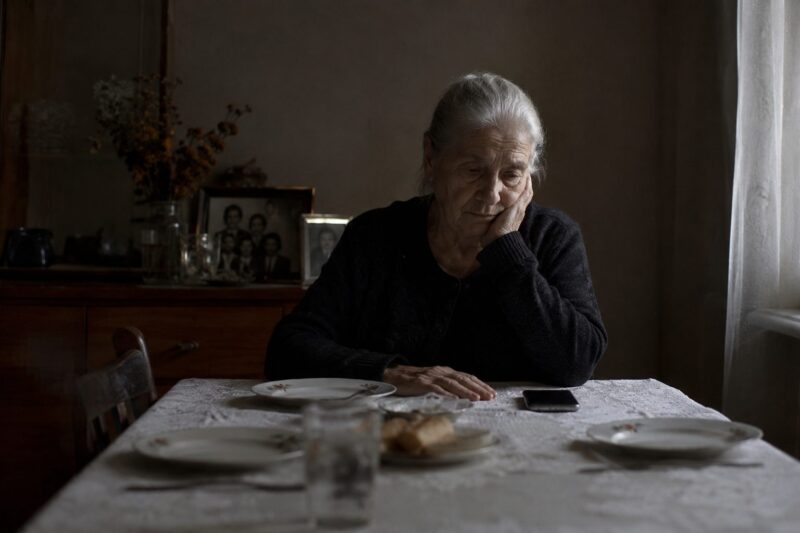
“Mother Miriam…”
The old woman opened the drawer of her cupboard, took out a thick envelope, and placed it in Anna’s hand.
“Tomorrow, if they come, give them this.”
“What is this?”
“What a mother should have told her children, but never could.”
The next morning, the children arrived with the documents. But Anna opened the door. Her eyes were red. What happened
next read in the comments 👇‼️👇‼️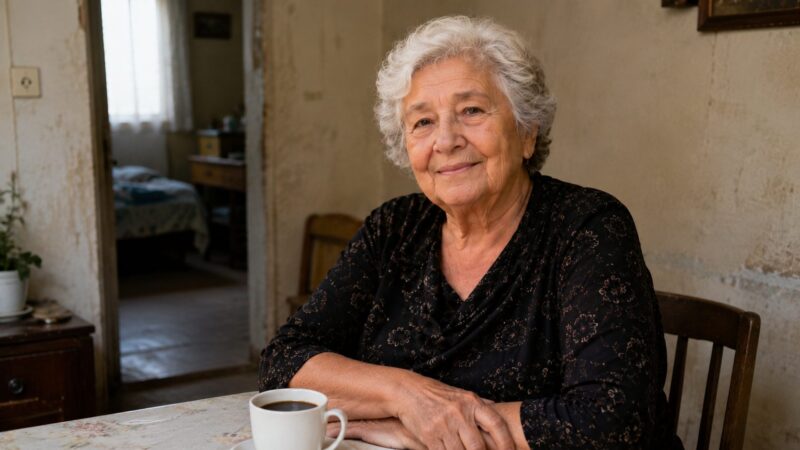
“Your mother became ill during the night… the ambulance did not arrive in time.”
Her daughter covered her mouth with her hand. The sons froze for a moment. But then the eldest son whispered,
“And the house?”
Anna slowly handed them the envelope.
Inside was a letter.
“My children,
I waited for three years for at least one of you to say, ‘Mom, come to our home.’ I did not come because I did not want to force my old age on you. I wanted to be loved, not kept.
You came on the day you found out my house was valuable.
That day, I finally understood — you did not miss me. You missed my walls.
I am leaving the house to Anna. Not because she is my daughter, but because she treated me like one. She brought my medicine, sat beside me every Sunday, and said, ‘Mother, I came.’
As for you, I leave you what has always been yours — my love. But that love no longer has a home.”
Under the letter were three small bags.
Each one had a child’s name written on it.
Inside were their childhood photos, their first shoes, school notebooks, and one small letter for each of them.
All the letters ended with the same sentence:
“I waited for you every day.”
And in that moment, they understood for the first time that sometimes a mother does not move away from her children.
The children move so far away that their mother’s waiting becomes her final breath.