“I am 70 years old, and I have never become a mother. Please don’t pity me”: The confession of an elegant woman I met at
the clinic 😱😨
That day, I had simply gone to see a dermatologist.
It was an ordinary public clinic — faded walls, a long corridor, tired people, endless lines in front of office doors, and that
heavy air that seemed to be made of years of accumulated complaints. People kept asking, “Who is last in line?” Someone
was arguing with the nurse, someone else was waving papers in their hand.
I sat near the door and accepted the fact that I would probably have to wait at least another hour. That was when I noticed
her.
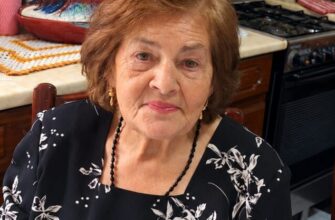
A woman was sitting across from me. In that noisy, exhausted environment, she looked so unusual that it was impossible not
to look at her. Her hair was perfectly styled, her back was straight, her face was calm, and a dark blue delicate scarf was tied
around her neck. The scent of her perfume was so soft that it did not bother anyone — it simply reminded me of some old,
expensive memory.
She did not look like a sick person sitting in line. She looked more like a woman who had accidentally found herself in the
wrong place, as if she had stepped out of an old film.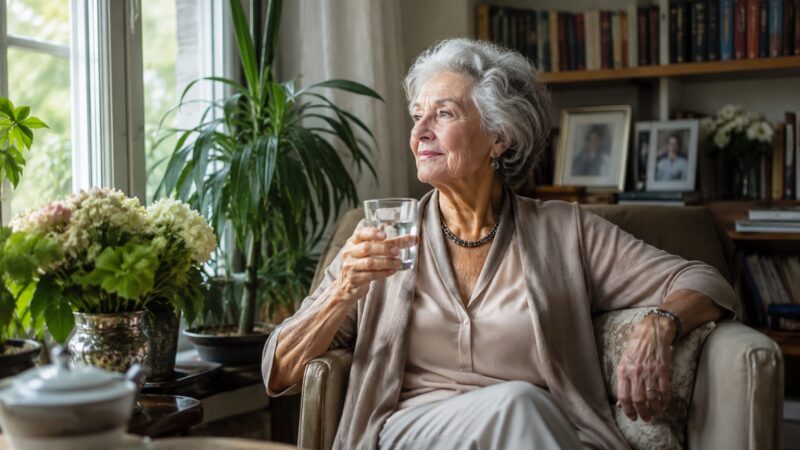
I thought she was probably about sixty-five. But when our eyes met, she smiled and said:
“You know, the hardest part is not waiting. The hardest part is when people think your life has to be right according to their
own standards.”
I did not manage to answer anything. There was such calmness in her voice that it immediately made me stay silent and
listen.
“I am seventy years old,” she said. “And I have never become a mother.”
I became awkward without meaning to. I did not know whether to offer sympathy, ask a question, or simply remain silent.
My face must have revealed my discomfort, because she laughed softly.
“Please don’t pity me. I don’t need it.”
That sentence froze me.
She told me that she had married for the first time when she was very young. It was a student love — pure, crazy, poor, but
full of big dreams. They lived in a tiny rented room where the wind blew through the window in winter, and in summer it
was so hot they could barely sleep. In the mornings, they drank instant coffee and believed that one day the world would
belong to them.
“I told him the truth from the very beginning,” the woman continued. “I told him I did not want children. Not because I
disliked children. I simply never had the desire inside me to become a mother.”
At first, her first husband had accepted it. Or at least he had pretended to. But over the years, his silence turned into
questions, the questions turned into accusations, and the accusations turned into cold walls.
“Every month he would say, ‘You’ll still change your mind, won’t you?’ And every time, I realized that he did not love me. He
loved the woman he hoped he would one day get out of me.”
When the woman turned thirty, their home was full of unspoken words. Her husband came home late more often, looked
into her eyes less and less. One evening, he came home and said:
“I can’t live my whole life in an empty house.”
The woman had stayed silent for a long time. Then she finally answered:
“And I can’t have a child just to fill your emptiness.”
They divorced without a big scandal. But sometimes the loudest collapses happen in silence. She walked out of that
marriage without a child, without a husband, but without betraying her own choice.
Years later, she fell in love for the second time.
That man was mature, calm, and had already seen his own share of pain and the past. He had a daughter from his former
wife, but he never asked the woman why she had never become a mother. He did not judge her, did not pressure her, did
not try to change her. Beside him, for the first time, the woman felt that love could exist without demanding sacrifice.
“We were very happy,” she said, and sadness appeared in her eyes for the first time. “In the evenings, we drank wine, listened
to old music, went to the sea, walked for hours in parks. He never said, ‘You are less of a woman.’ Beside him, I was simply
myself.”
But sometimes happiness comes not to last long, but to be remembered forever.
One night, he fell asleep beside her and never woke up again. Cardiac arrest. In the morning, the woman woke up, looked at
him, and for a moment thought he was still sleeping. Then the silence in the room became so heavy that she understood
the warmest chapter of her life had closed.
I listened to her, and my heart tightened.
“Have you been living alone since that day?” I asked.
She nodded.
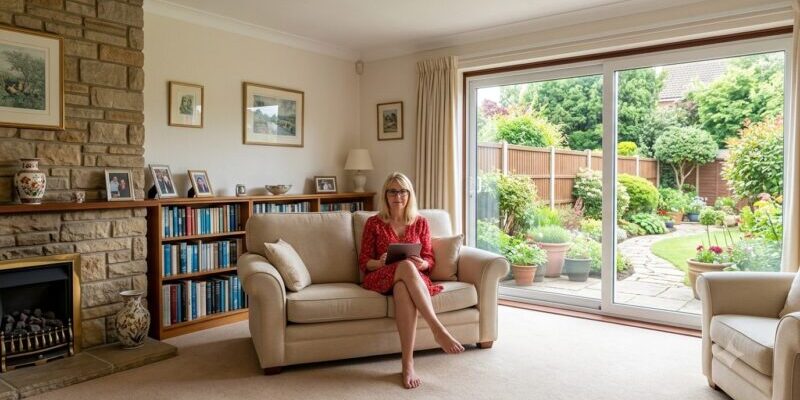
“Yes. I live in my own home. It is a large, bright house. I have flowers, books, music, friends, old photographs. Sometimes I
travel. Sometimes I don’t speak to anyone all day. And you know what? That silence does not suffocate me. It belongs to me.”
I could not hold back.
“Have you never regretted not having children?”
She looked straight at me, without being offended, without trying to justify herself. What happened next read in the
comments ‼️👇‼️👇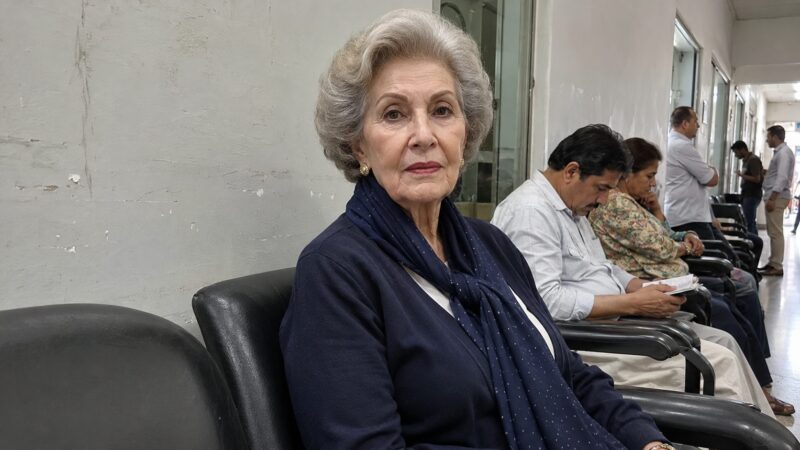
“No. Never. People think children are insurance for old age. But a child is a human being, not your future caregiver. They
grow up, leave, and build their own lives. And that is normal. But I never wanted to tie my happiness to someone else’s
presence.”
Then she took a small bottle of water from her bag, drank a sip, and smiled.
“And as for that famous ‘glass of water’ in old age, anyone can give it. The important thing is that I can pay for it and not ask for it as a debt.”
I fell silent.
That woman was not the lonely old woman I had imagined. She was not defeated. She was not waiting for someone to save her. She had been the owner of her own life — with all its pain, losses, and choices.
When the nurse called her name, she slowly stood up, adjusted her scarf, and said to me:
“Not every person has to live the way others expect them to. Sometimes happiness means not apologizing to anyone for your own life.”
She entered the doctor’s office, and I remained in the corridor, surrounded by a strange silence.
That day, I understood something: we judge people too easily — whether they are mothers or not, married or alone, successful or not. But no one knows what price a person has paid to protect their inner freedom.
And maybe the bravest women are the ones who never lived just to look right in the eyes of the world.