I married a dying stranger in a hospital room so he wouldn’t leave this world alone… But after seven days, his old green
backpack revealed the secret life he had been hiding 😱💔
I never imagined my wedding would happen in a small hospital room, with no flowers, no music, no guests, and instead of a
ring, a metal pull tab from a soda can. But that day, I said yes.
Thomas was seventy-two. I was twenty-nine. We had known each other for only a few days. He was dying, and I was simply
one of the volunteers who sat beside patients no one came to visit.
The first time I saw him was in the waiting room. His old green backpack was always beside his foot. He barely spoke about
himself, but he remembered everyone. He remembered the nurse’s husband’s name, the housekeeper’s favorite song, and
the cafeteria worker’s grandson’s driving test. It was strange, but it was also warm.
After my mother died, I had become a person who was only half alive. I went to work, paid bills, replied to messages with
little smiling emojis, but inside, everything was empty. I did not volunteer at the hospital because I was strong. I went there
because it was the only place where my grief did not feel strange. Thomas understood that. On the fourth day, he looked at
me and whispered,
“Sarah, marry me.”
I thought he was speaking because of the fever or the pain medicine.
“We barely know each other,” I said.
He looked at me for a long moment.
“I know enough. You are the kind of person who doesn’t leave when things become difficult.”
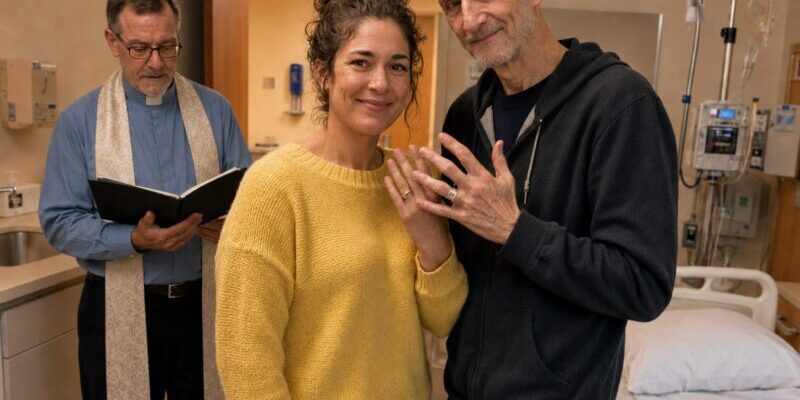
Two days later, the hospital chaplain married us in Thomas’s room. I wore a yellow sweater because Thomas had said that
color made the room look less sad. He slipped the soda can pull tab onto my finger and smiled.
“We’ll pretend this is the most expensive ring in the world.”
For seven days, I was his wife. I brought him tea, adjusted his blanket, and sat beside him at night when pain made it hard
for him to breathe. The last time he opened his eyes, he said,
“Don’t mistake silence for peace.”
I did not understand. He only smiled.
“You will.”
Then he fell asleep and never woke up again. An hour after his death, his lawyer came into the hospital room. In his hand was
Thomas’s green backpack.
“He wanted me to give this to you,” the lawyer said. “And he said you had to learn the truth alone.”
I expected a will, money, maybe a family secret. But inside the backpack, there were only envelopes. Dozens of envelopes.
Each one had the name of a place written on it.
“Bus Stop.”
“Grocery Store.”
“Airport.”
“Laundromat.”
“Park Bench.”
“Waiting Room.”
My heart began to beat faster. I opened the first one. Inside was an old ticket. On the back, Thomas had written:
“He finally got on the fourth bus.”
The second envelope held a soup receipt.
“She accepted the soup.”
The third held a hospital visitor sticker. On the back, it said:
“She said her mother laughed as if she were trying not to laugh.”
I froze. That was my sentence. The continuation read in the comments ‼️👇‼️👇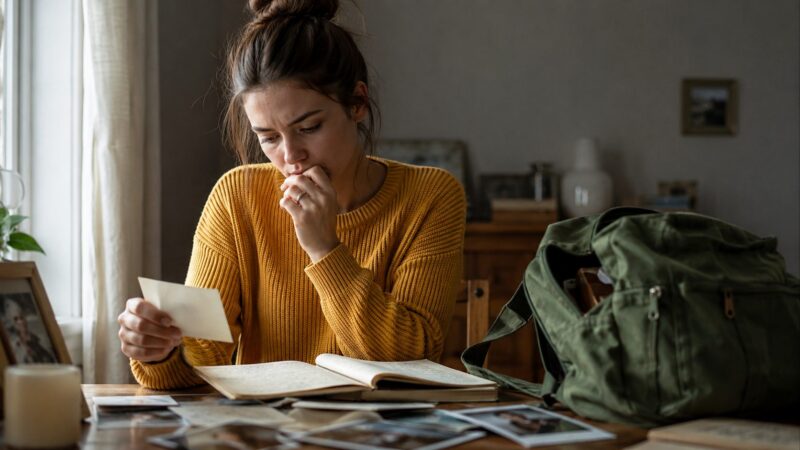
The first day Thomas met me, he had asked me exactly that — not how my mother died, but how she laughed. I had
answered, “As if she were trying not to laugh.”
He had kept it. That was when I realized the backpack did not hold random things. It held traces of people’s invisible pain.
At the very bottom, I found a worn notebook. On the first page, it said:
“People think loneliness is when there is no one beside you. In truth, loneliness is when no one notices you.”
Page after page, Thomas had written about people. There were no names. Only moments.
A boy at a bus stop who had missed three buses because he did not want to go home.
An elderly woman who stood in front of canned soup for twenty minutes, wondering if anyone would notice if she did not
come back the following week.
A young father outside a delivery room pretending to look at his watch, when he was actually trying not to cry in front of his
own father. At the bottom of every page, there was one short line.
“He went inside.”
“She called her sister.”
“He slept.”
“She smiled.”
Thomas had not saved people with grand speeches. He had simply noticed them at the very moment they were quietly
disappearing from the world inside themselves.
A few days later, his lawyer showed me an old newspaper clipping. In the photograph, Thomas was younger, standing in
front of a grief counseling center. The headline read:
“Grief Counselor Retires After 40 Years of Service.”
I could barely breathe.
All this time, he had not simply been sick. Until his final day, he had continued doing what he had done his entire life —
guiding people back toward life. Then the lawyer gave me one last envelope. On the front, it said:
“After Tuesday.”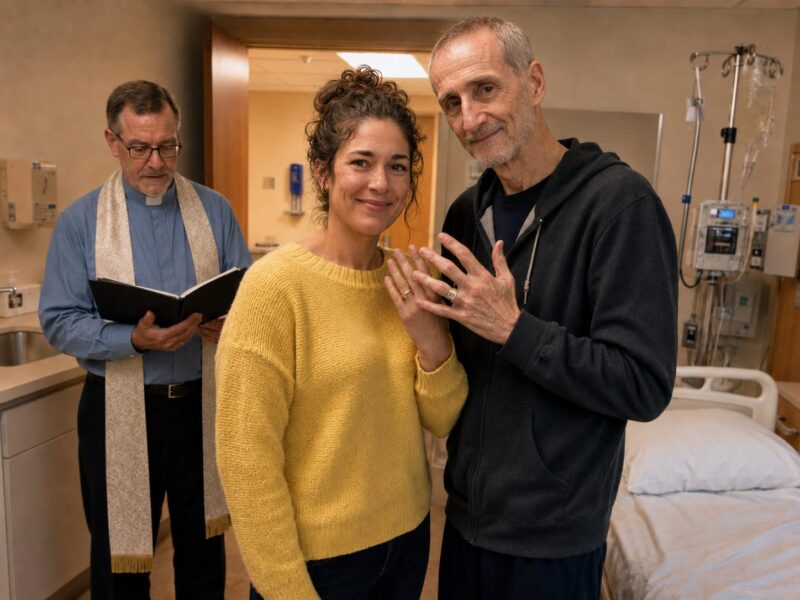
There was no letter inside. Only a list. Go to the botanical garden. Buy peaches at the farmers’ market. Eat vanilla ice cream
on Oakridge Street. Feed the ducks, even if they ignore you. And at the bottom, one final sentence:
“Life does not always return through a great miracle, Sarah. Sometimes it comes back through an ordinary Tuesday.”
The following Tuesday, I did everything on that list.
And when the ducks completely ignored me, I laughed out loud for the first time in months.
That was when I finally understood Thomas’s last words.
Silence was not peace.
I had simply stood inside my pain for so long that I had started confusing it with life.
But before Thomas died, he had not left me a backpack.
He had left me a road back.