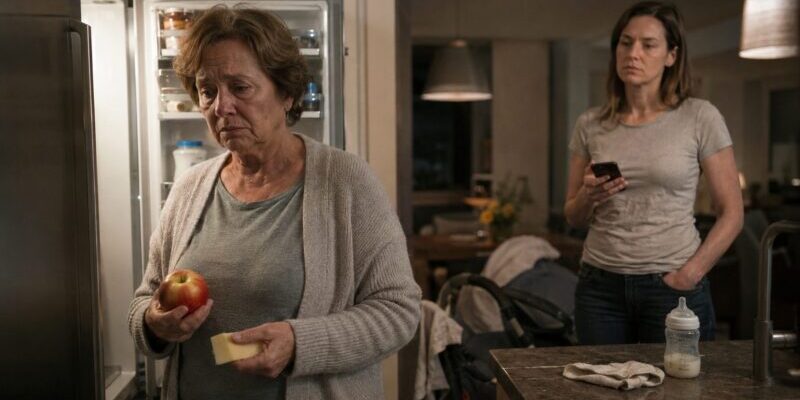
When my daughter told me not to take food from her fridge without permission, even though I helped with my grandson
every day, I realized I needed to make a change… 😨😱
I never waited for anyone to ask for help. I simply started going to her house almost every day. At first, I stayed for a few
hours. Then from early morning until late evening.
My daughter worked from home and was always stressed. My son-in-law was busy too and often came home late. The baby
was difficult. He barely slept at night, cried often, and needed constant attention. When I looked at my daughter, I saw
myself thirty years earlier — exhausted, confused, trying to hold everything together while pretending she was fine. So I
helped.
I arrived in the morning when the city was still waking up. I opened the door quietly with my key so I wouldn’t wake anyone. I
washed bottles, boiled water for tea, folded tiny clothes, and took my grandson in my arms so my daughter could sleep for
just thirty more minutes. Sometimes I spent the whole day with him.
I fed him. Changed him. Walked with him for hours in every kind of weather. I carried him until my back burned. I learned
the meaning of each cry — hunger, tiredness, pain, loneliness. And whenever he fell asleep against my chest, I told myself it
was all worth it. My daughter rarely said thank you. But I didn’t expect it. I told myself this was what family meant.
Sometimes, when I returned home late at night, my legs trembled from exhaustion. My blood pressure rose. My back ached.
Still, the next morning, I went again, because I knew it would be hard for them without me.
I even began buying things with my own money — baby formula, fruit, diapers on sale. A few times, I left money
“accidentally” on the shelf, so my daughter wouldn’t feel uncomfortable.
She never asked where it came from. And I never said anything. Maybe that is why that evening hurt so much.
It had been a long day. My grandson had cried almost nonstop, my daughter had endless online meetings, and I had taken
the baby outside for a long walk just to calm him down. By evening, I was completely drained. My hands were shaking
slightly. I had to take my medicine, but I had eaten almost nothing all day. So I walked quietly into the kitchen, opened the
fridge, and took one apple and a small piece of cheese. That was all. Then I heard my daughter’s voice behind me. Calm.
Cold. Almost unfamiliar.
“Mom, please don’t take food from the fridge without asking.”
At first, I didn’t even understand.
“What?”
She sighed without looking up from her phone.
“We’re counting everything now. Groceries are expensive. Honestly… it makes me uncomfortable when someone just takes
what we bought with our money.”
For a few seconds, I just stared at her. At my own daughter. At the woman I had once stayed awake for through feverish
nights. The child for whom I had worn an old coat for three winters so I could buy her warm clothes. The girl whose favorite
meals I cooked even when I was too tired to stand.
“I’m sorry,” I whispered. “I’m just very tired today. I’ve been with the baby all day…”
“I understand,” she said. “But you could bring food with you. This isn’t a restaurant.” What happened next read in the
comments 👇‼️👇‼️
This isn’t a restaurant. Those words stayed in my head for a long time. I put the apple back. Then the cheese. Suddenly, I felt
ashamed. Ashamed that I had opened the fridge. Ashamed that I had felt at home in my own daughter’s kitchen.
That evening, I left earlier than usual. She didn’t even notice I was quiet. At home, I sat alone in my dark kitchen and tried to
understand why it hurt so much. It wasn’t about the apple. It wasn’t about the cheese. It was about everything I had given —
and how easily it had become expected.
I remembered canceling my doctor’s appointment because she needed me. I remembered going to her house with a fever
because the baby was sick and they had to work. I remembered falling asleep in a chair from exhaustion, then waking up to
my grandson’s crying and getting up again while my daughter slept peacefully in the bedroom. Not once had I felt like a
stranger. Until that evening. The next morning, I woke up with a strange calmness. This could not continue. I called her.
“Mom, are you on your way?” she asked quickly. “I have an important meeting today. I really need your help.”
I stayed silent for a moment.
“You’ll have to find a nanny,” I said.
There was silence.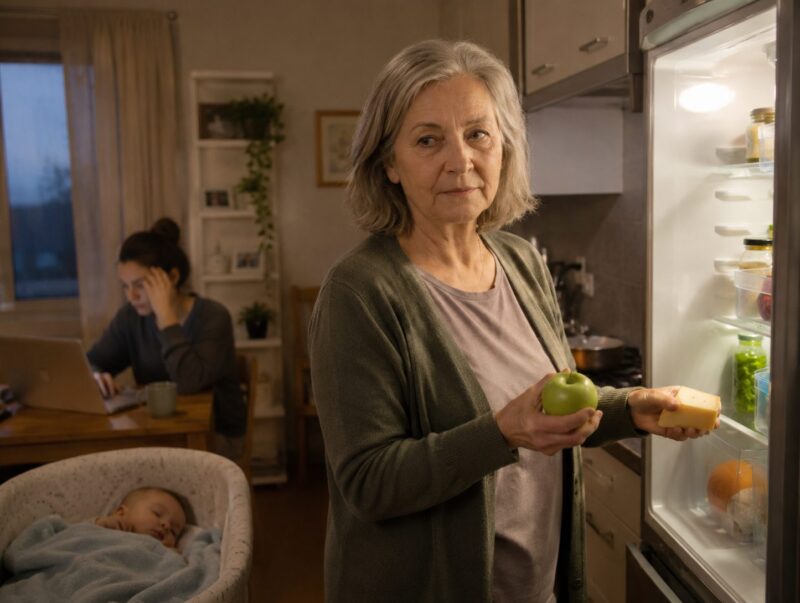
“What do you mean?”
“I won’t be coming every day anymore.”
“Are you offended because of yesterday? Mom, why do you take everything so seriously?”
“No,” I interrupted her. “It’s not about yesterday. I realized I no longer feel like family in your house.”
“Mom, you’re exaggerating.”
“Maybe. But I’m too tired of being convenient.”
She went quiet. Then she said, irritated:
“You know it will be very hard for us without you.”
And that broke something in me.
Not “we miss you.” Not “we love you.” Not “I’m sorry.”
Only: “It will be hard for us.”
“I love you,” I said softly. “And I love my grandson more than life. But I am not a free nanny, a housekeeper, or a woman who
must earn the right to drink tea in her own daughter’s home.”
After that call, I cried for a long time. Not from anger. From disappointment. Almost a week passed. She didn’t call. Then one
evening, the doorbell rang. My daughter stood there, exhausted, with red eyes. My grandson was asleep in her arms.
“Mom…” she whispered.
For the first time, she wasn’t angry. She was ashamed.
“I didn’t understand,” she said. “I didn’t see how much you were doing. I thought… because you’re my mother, you would
always be there.”
I looked at her for a long moment.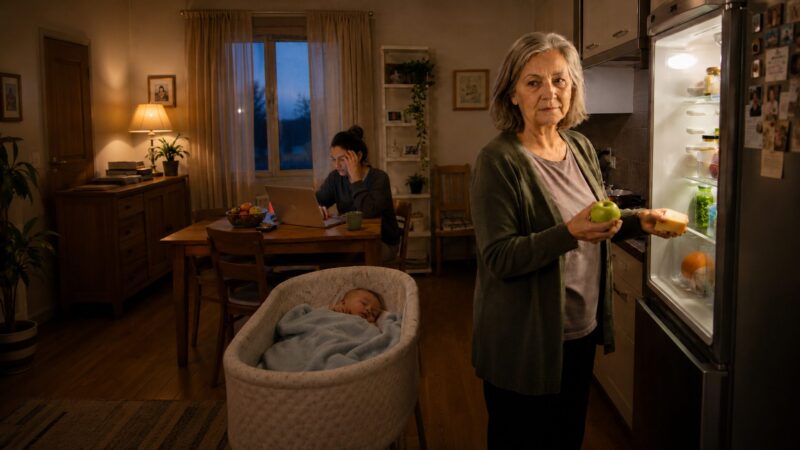
Then she took a small bag from the stroller. Inside were apples, cheese, tea, and my favorite biscuits.
“I brought these for you,” she said, her voice breaking. “Not because I owe you food. Because I owe you respect.”
My eyes filled with tears.
That night, I let her in. Not because everything was forgotten, but because something had finally been understood.
From that day on, I still helped with my grandson. But not every day. And when I came to their house, there was always a cup
of tea waiting for me on the table.
Sometimes people need to lose your daily presence to finally understand how much warmth you were giving them all along.