At 68, my son convinced me to sign the house to him… He planned to sell It behind my back, my son thought I was too
old to fight back… 😨‼️
When I was 68, my life seemed to have frozen. My husband had passed away, and we had spent 42 years together. Now the
house—full of memories—had become my only companion: cracked teacups in the kitchen, his old armchair by the window
where he used to rest in the evenings, the indescribable scent of wood and tobacco in the cupboards, remnants of his
presence.
One day, my son began visiting more often. Daily calls, bags of groceries, long conversations in the kitchen. His voice was
gentle, caring, and for the first time in years, I felt truly needed. But that was only the beginning.
— Mom, you can’t be alone.
— At your age, it’s dangerous.
— We need to be close to you.
I nodded. Loneliness was so heavy that I was ready to believe anything, just to silence the emptiness.
A few days later, he began to speak “carefully” about the paperwork.
— It’s just a formality, Mom.
— But the house…
— The house will be yours today, and mine tomorrow. You understand? 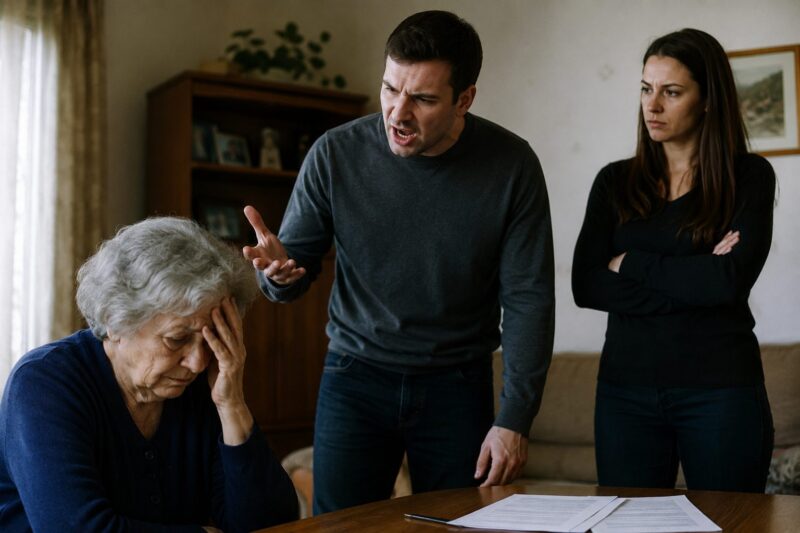
I agreed. I didn’t want to argue; I was tired of being alone, tired of being strong. The house we had built together over ten
years now became part of a game I didn’t even know I was playing.
Two weeks after signing the papers, everything began to change. First came the foreign objects—women’s perfume in the
bathroom, creams I didn’t recognize, shoes by the entrance, as if they had always belonged there. Then my son brought her.
Her name was Lara. A young woman with a perfect smile, meticulously styled hair, and eyes that scrutinized every corner.
She didn’t ask for permission—it was as if the house had long belonged to her, and she finally got the keys.
— Mom, meet Lara, — my son said.
I nodded—not as a mother, but as the last “mistress” of the house, still holding on to my rights, though it felt almost
ceremonial.
A few days later, he explained, almost sweetly:
— It’ll be uncomfortable for you and Lara on the same floor. We thought it’d be better if you stay in the small room upstairs.
The small room upstairs… literally the attic full of blankets, old boxes, and shadows of the past. I felt uneasy. But that night I
went there, sitting in the dust, in silence, without turning on the light. And for the first time in years, I realized a terrifying
truth: loneliness isn’t just being alone—it’s being unnecessary.
A month later, my son said something that finally broke me: What happened next read in the comments ‼️👇‼️👇
— We’ve decided to sell the house and buy an apartment. It’ll be easier for everyone.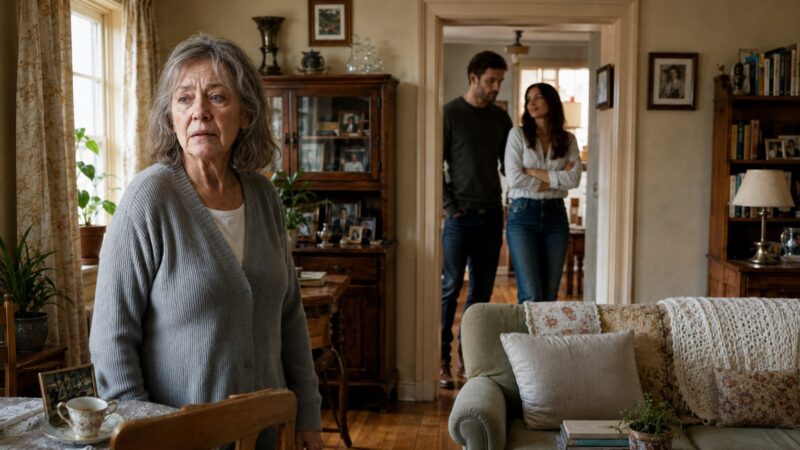
I stared at him, searching for the boy who once held my hand, afraid of the dark. But that boy was gone. Standing in front of
me was a man in whom almost no trace of the child I had raised remained.
— But this is your father’s house…
— Father is gone, Mom. Life must go on.
I realized the truth: for him, I too had become the past. I was no longer a person, just an obstacle in the way of “his and Lara’s
future.”
The impact was crushing. But that silence, that emptiness, reminded me of a long-forgotten document my husband had left
—he had never wanted the house to leave my hands entirely. That paper gave me strength.
Weeks later, my son received a letter from the court: the house could not be sold without my consent, and I had the full right
to live there for the rest of my life.
When he came to see me, he didn’t speak. He shouted, thinking he could destroy what he could not take. But I felt only strength, no pain, no fear, just calm.
Lara, who once smiled with confidence, now looked uneasy. Her eyes and smile froze. The house she thought she had conquered suddenly felt unsafe.
Then came infrequent visits, then only phone calls, then none at all. The house became silent once again. Not empty—silent. No steps that weren’t mine. No voices deciding for me. No feeling that I was a guest in my own life.
Recently, a neighbor asked me:
— Aren’t you sad that your son hardly comes?
I looked out the window as evening slowly fell and realized: grief is still a bond. But I no longer wanted to be tied to pain.
— Much worse would have been living every day beside someone who loves not you… but only what belongs to you.
Now, my house, my silence, my hard-earned life—it is entirely mine.