I am 52 years old, and my name is Sarah. My mother, Margaret, is 74. Just three weeks ago, I was firmly convinced that having her move in with us had been the biggest mistake of my life.
Today, when I look back on that period, I feel ashamed of the things I thought about my own mother.
It all began after my father passed away.
My mother was left alone in her old house. At first, I called her every day. But as time went on, I noticed that she often forgot to eat, asked the same questions over and over, and sometimes couldn’t even remember whether she had locked the front door.
So, I decided to have her come live with us.
My husband, David, wasn’t opposed to the idea at the start.
“Let her stay with us for a few months,” he said. “We’ll see what happens after that.”
But those few months turned into two years.
During that time, everything in our family changed.
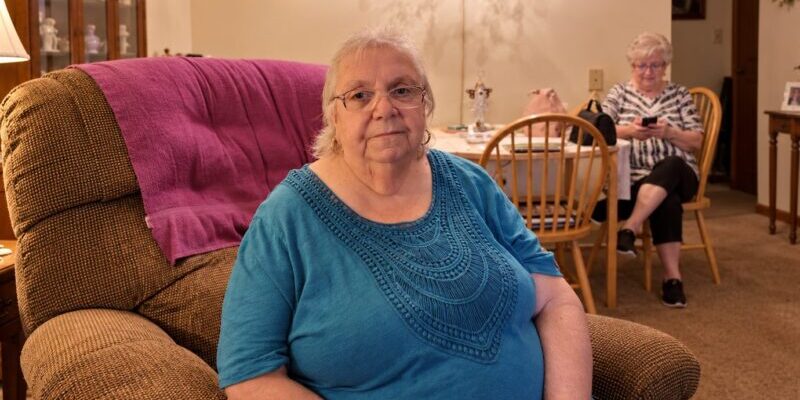
David began coming home from work later and later. We rarely ate dinner together anymore. As for my mother, she spent almost every day in the same armchair in the living room, wearing her blue blouse, in front of the television.
One day, David said something that broke my heart:
“Sarah, I can’t go on living like this. Either your mother leaves, or I do.”
His words filled me with absolute terror.
“But… she’s my mother!”

“And I am your husband! We’ve been together for twenty-seven years. Does that mean absolutely nothing now?”
I barely slept that night.
The next morning, I told my mother that I had found a care home for people her age, with staff on duty 24 hours a day.
She looked at me for a long time.
“Does David want me to leave?”
I didn’t know how to answer.
My mother simply nodded.
“It’s alright, my dear. If you’ll both be happier this way, then I’ll go.”
She didn’t shed a single tear.
And that, precisely, was what hurt the most.
Three days later, I took her to the care home. As it came time to say goodbye, she took my hand.
“Sarah, I want to ask you something. When you get back home, don’t believe everything you’re told.”
“What do you mean, Mother?”
She turned her gaze toward the window.
“You’ll understand soon enough.”
I assumed my mother was just confused.
But three days later, I received a call from the care home.
“Ms. Sarah, please come right away. Your mother has shared something very important with us, and there are people here who need to speak with you.”
My heart began to race.
“Has something happened to my mother?”
“She’s fine. But we can’t discuss this over the phone.”
When I arrived, I was shown into a large common room.
My mother was sitting in the center, wearing the same blue blouse. Several strangers were standing around her. One held a mobile phone, another a small recording device.
And the woman sitting next to my mother was crying. Seeing me, Mom said softly:
“Forgive me, my dear. I didn’t want you to find out this way.”
At that moment, one of the strangers approached me.
“Ms. Sarah, your mother has told us everything. We have already spoken with your husband.”
I stood there, frozen.
“What does this have to do with my husband?”
The man turned on his phone, opened a video, and said:
“Before you watch, you should know that for the past two years, your mother has been doing something—almost every single day—that you had absolutely no idea about.”
I turned my gaze toward the screen.
And, within the first few seconds, my hands began to tremble…

The video showed our kitchen.
At first, I couldn’t figure out who had made the recording.
Then, I caught sight of David.
He was standing by the kitchen table, while my mother sat across from him.
“Margaret, we agreed that Sarah shouldn’t know anything about this,” my husband said.
“I kept my promise, David. But things can’t go on like this anymore.”
“If we tell her now, she’ll never forgive us.”
The video stopped.
I looked up.
“What does all this mean? What are you hiding from me?”
My mother began to cry.
The woman sitting next to her stepped toward me.
“My name is Linda. Two years ago, your mother saved my son’s life.”
I stared at her, bewildered.
“What do you mean?”
Linda explained that her son, Michael—who was 38 at the time—had fallen gravely ill two years earlier. He required long-term medical treatment, but the family couldn’t afford the costs.
Linda was working two jobs, sometimes going days with barely any sleep, yet it still wasn’t enough.
One day, she happened to run into my mother, whom she had known for many years.
Upon learning of her difficult situation, Mom went to see Linda the very next day to offer her help.
“Your mother paid for part of my son’s treatment,” Linda explained. “After that, she gave us money every month. Without her, we wouldn’t have been able to continue the treatment.”
I looked at my mother, stunned. “But you always told me you had almost no money left!”
“Because, in truth, I had almost nothing left, my dear.”
“Then why did you keep helping, despite everything?”
My mother wiped away her tears. “Because I am a mother myself, Sarah. I couldn’t have slept soundly knowing that another mother was lying awake, consumed by the fear of losing her son.”
I couldn’t find the words.
But one question kept gnawing at me.
“And where does David fit into all of this?”
The man stepped forward and introduced himself. His name was Thomas, and he ran a local charity.
“When your mother’s savings ran out, your husband discovered everything by chance. At first, he was angry and tried to talk her out of it. But then, he met Michael in person.”
“And what did he do?”
“He decided to help, too. For two years, he contributed a portion of his salary toward Michael’s treatment. And when that wasn’t enough, he took on extra work on the weekends.”
I had to grab the back of a chair to steady myself.
Suddenly, I remembered all those evenings when David came home late—his exhausted face, his sleepless nights, and all the times he had even refused to take a few days off.
I had thought he’d grown tired of me.
When, in reality, he had been helping another family for two years.
“Why didn’t you tell me?” I asked, my voice trembling.
My mother took my hand. “At first, I was the one who asked him to. You had just started a new job and were already very worried. Then, things became increasingly complicated.”
I turned toward Thomas.
“And what about the nursing home? My husband threatened to leave me if my mother didn’t move out.”
Thomas’s expression turned serious. “Three weeks ago, your mother’s health began to decline. She was having great difficulty walking, yet she refused to see a doctor. David reached out to us, asking us to find a place where she could receive professional care.”
“But then, why did he hurt me so much?”
This time, it was my mother who answered.
“Because he was truly exhausted, my dear. He had been working for two years, almost without a break. And I kept arguing with him because I wouldn’t go to the doctor. That day, he simply lost his patience.”
Mom fell silent for a moment.
“Later, he regretted what he had said. And I decided to leave, because I didn’t want your marriage to fall apart because of me.”
My eyes filled with tears.
In that moment, I realized that we had all made mistakes.
My mother had kept her struggles to herself. My husband hadn’t been honest with me. And I hadn’t noticed just how exhausted they both were.
So, I asked:
“But why is everyone gathered here today?”
Linda smiled, tears in her eyes.
“Because Michael is being discharged from the hospital today. His condition is stable. The doctors say he can return to a normal life, though he will still need to go in for regular medical check-ups.”
At that very moment, the door opened.
A tall man walked into the room, carrying a massive bouquet of flowers.
He approached my mother and knelt before her.
“Mrs. Margaret, two years ago, I had lost all hope. You helped me keep fighting. If I am standing here today, it is thanks to you.”
My mother pulled him into an embrace.
“Stand up, my boy. I only did what any mother would want to do for her child.”
Everyone began to applaud.
I was in tears, but I still didn’t know the most important part.
Thomas walked over to me.
“Sarah, your mother’s story touched the donors at our organization. They’ve decided to establish a foundation in her name, dedicated to helping families facing financial hardship due to serious illness.”
My mother immediately protested. “I don’t want anything to bear my name.”
“But your kindness can continue to help others—even if, one day, you are no longer able to provide support with your own money,” Thomas replied.
Just then, David entered the room. He looked exhausted, with dark circles under his eyes.
Upon seeing me, he froze.
“Sarah, I should have told you everything.”
I stepped toward him.
“You let me believe that I had to choose between my mother and my husband.”
His eyes filled with tears.
“I know. I was afraid that your mother’s health might deteriorate for lack of proper care. But that didn’t give me the right to speak to you that way. Please, forgive me.”
We remained in each other’s arms for a long time.
Not all of our problems were solved that day, but we made a pact never to keep important matters from one another again.
My mother stayed in a specialized facility for a while longer. We visited her every single day.
Two months later, she came home.
We placed her favorite armchair back in the living room, right by the window.

One Sunday morning, Mom was sitting there in her blue blouse, while David was making coffee in the kitchen.
“You know, Sarah,” my mother said, “sometimes older people become so afraid of being a burden to others that they start hiding their own suffering.”
I sat down beside her.
“Forgive me, Mom. I should have listened to you better.”
She gently stroked my hand.
“And I should have told you everything much sooner.”
At that moment, David walked in with three cups of coffee.
Mom smiled.
“So, dear son-in-law, are you going to try to kick me out again this time?”
David burst into laughter.
“Only if you refuse to go to the doctor again! But in that case, I’ll go with you!”
All three of us burst out laughing.
Today, when I look at this photograph of my mother, I no longer see an old woman who had become a burden to our family.
I see a mother who, with her modest savings and her immense heart, managed to restore hope to another family.
And I realized something.
Sometimes, we are so consumed by our own problems that we fail to notice the enormous sacrifices made, in silence, by those closest to us.
Don’t wait until your elderly mother quietly agrees to leave your home before you finally ask her how she is truly feeling.