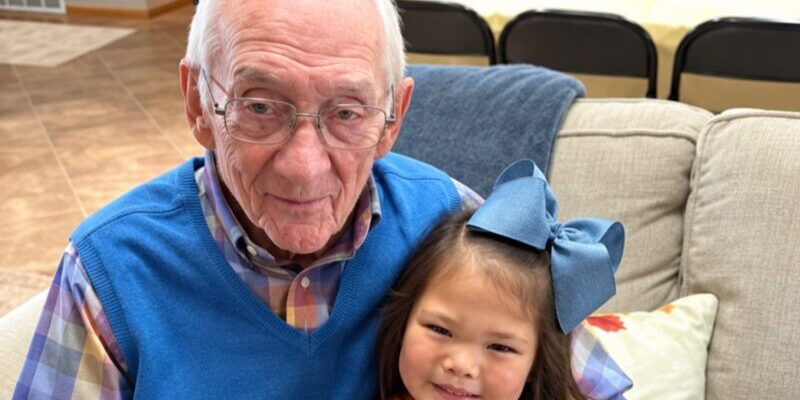
My Grandfather Told My 3-Year-Old daughter to Lie Down on the Kitchen Table Because “Grandpa Needs to Check
Something.” Her Mother Walked In and Froze 😱😨💔
The first thing my daughter Sarah noticed was how quiet the house had become.
That alone frightened her.
Her three-year-old daughter, Lily, was never quiet at Grandpa Robert’s house.
She was usually running between the kitchen and living room, carrying dolls, asking questions, or following my father from room to room.
But that afternoon, Sarah opened the front door and heard nothing.
“Lily?”
No answer.
Then she heard my father’s voice from the kitchen.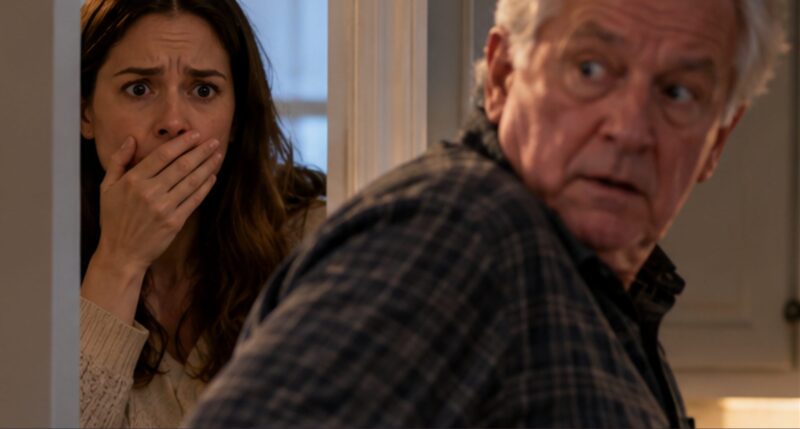
Low. Serious.
“Just lie still for Grandpa, sweetheart. I need to check something.”
Sarah stopped walking.
For several seconds, she simply stood in the hallway.
Then she heard Lily say quietly,
“Are you going to tell Mommy?”
My father answered almost immediately.
“No. Not yet.”
Sarah later told me those four words changed everything. She walked toward the kitchen as quietly as she could.
The door was partly closed. Through the opening, she saw Lily lying flat on the kitchen table.
My father was standing beside her.
One hand was resting near Lily’s shoulder while the other was holding something Sarah couldn’t see clearly.
“Dad?”
My father jumped. Sarah pushed the door completely open.
“What are you doing?”
Lily immediately sat up. My father quickly put whatever he had been holding into his pocket. That made Sarah’s stomach
drop.
“Get down from there, Lily.”
“But Mommy—”
“Now.”
Lily climbed down. Sarah pulled her behind her. My father stared at her.
“Sarah, you’re misunderstanding.”
“Then explain it.”
“I can’t.”
That answer made everything worse.
“You can’t?”
“Not yet.”
Sarah grabbed Lily’s coat. My father moved toward her.
“Please don’t leave.”
“Stay away from her.”
He stopped immediately. His face changed.
“Sarah…” The continuation read in the comments ‼️👇‼️👇
“You told my three-year-old daughter to lie on a table. You told her you weren’t going to tell me what you were doing.”
“It isn’t what you think.”
“You don’t know what I’m thinking.”
My father looked at Lily. Then back at Sarah.
“No. But I can see it on your face.”
Sarah left.
She called me from the car.
She was crying so hard I could barely understand her.
At first, even I didn’t know what to say.
My father was seventy-four years old.
He had helped raise Sarah.
He had been there when Lily was born.
I had trusted him completely.
But Sarah kept repeating one detail.
“He hid something in his pocket when I walked in.”
That bothered me too.
That evening, I called him.
“Dad, what happened?”
Silence.
Then he said,
“I need one more day.”
“For what?”
“To be sure.”
“Sure about what?”
He wouldn’t answer.
I became angry.
“If there is something involving Lily, you need to tell us now.”
“I will.”
“When?”
“Tomorrow.”
Then he hung up.
Sarah refused to let Lily visit him again.
But what frightened her even more was what Lily started saying.
The next morning, while Sarah was making breakfast, Lily asked,
“Is Grandpa mad because I told you?”
Sarah froze.
“Told me what?”
“That Grandpa checks me.”
Sarah dropped the spoon she was holding.
“What does Grandpa check?”
Lily shrugged.
“My back.”
Sarah knelt beside her.
“What about your back?”
“Grandpa says I have to stay straight.”
“Has he done this before?”
Lily nodded.
“Three times.”
Sarah called me immediately.
She was furious now.
Three times.
My father had been doing something without telling any of us.
That afternoon, Sarah remembered something else.
For several weeks, my father had been asking strange questions.
Does Lily fall often?
Does she complain that her legs hurt?
Does she always sit with one leg underneath her?
Had the pediatrician ever said anything about her shoulders?
At the time, Sarah had thought he was simply being an overprotective grandfather.
Now every question felt different.
Then she remembered something that terrified her even more.
Two weeks earlier, she had walked into the living room and found my father watching Lily as she played on the floor.
Not smiling.
Studying her.
When Sarah asked what was wrong, he had immediately changed the subject.
By that evening, none of us knew what to believe.
Then my father called.
His voice sounded exhausted.
“Come over tomorrow morning. Both of you.”
Sarah refused.
“Tell me now.”
“I need to show you.”
“Show me what?”
A long silence followed.
Then he said,
“The reason I put Lily on that table.”
The next morning, Sarah came with me.
She wouldn’t let Lily come.
My father was sitting at the kitchen table when we arrived.
In front of him was a folder.
Beside it was the object Sarah had seen him hide in his pocket.
A small measuring tape.
My father pushed the folder toward us.
Inside were photographs.
All of Lily.
Walking.
Standing.
Sitting.
At first, Sarah looked furious.
“Why do you have pictures of my daughter like this?”
“Look at her shoulders.”
We did.
“I don’t understand,” I said.
My father pointed to one photograph.
“Her left shoulder sits slightly higher.”
Then another.
“Here. Look at her waist.”
Another.
“And here.”
Sarah stared.
“What are you saying?”
My father’s voice changed.
“Your grandmother had the same thing.”
Sarah looked at me.
My mother—my father’s wife—had died when Sarah was only six.
Most people in the family believed it had been complications from an unrelated illness.
But my father finally told us something he had kept secret for nearly thirty years.
My mother had suffered from a severe spinal condition that had gone unnoticed when she was young.
By the time doctors discovered how badly her spine had curved, it had already affected other parts of her health.
My father had spent years blaming himself.
Because he had noticed.
Long before the doctors did.
He had noticed one shoulder sitting higher.
He had noticed the way she walked.
He had noticed how one side of her clothes seemed to hang differently.
But he had said nothing.
“I thought I was imagining it,” he whispered.
Then he looked at Sarah.
“Three weeks ago, I saw Lily standing near the window. For one second, she looked exactly like her grandmother did at that age.”
Sarah slowly sat down.
“So you put her on the table…”
“To see whether her spine looked straight while she was lying flat. Fully dressed. I measured her shoulders and legs because I wanted to know whether I was imagining it again.”
“Why didn’t you tell me?”
My father’s eyes filled with tears.
“Because I knew what mentioning your grandmother would do to you.”
Sarah had suffered from terrible anxiety about inherited illnesses after becoming a mother.
My father knew that.
“I wanted to be certain before I frightened you,” he said.
He pushed one last paper toward us.
It was an appointment confirmation.
He had called a pediatric orthopedic clinic and described what he had noticed.
They had told him Lily should be evaluated.
Sarah covered her mouth.
All the terrible possibilities she had imagined suddenly collapsed into something completely different.
My father looked at her.
“I should have told you. Asking Lily to keep it from you was wrong. I thought I was protecting you until I knew whether there was really something to worry about.”
Sarah began crying.
Two days later, Lily was examined.
My father had been right.
There was a mild spinal curvature.
But because it had been noticed so early, the doctor told Sarah there was no reason to panic. Lily would simply need monitoring as she grew.
Nothing more at that point.
That evening, Sarah took Lily to see Grandpa.
The moment Lily saw him, she ran into his arms.
Sarah stood in the kitchen for a long moment before saying,
“Dad, never ask my daughter to keep something from me again.”
“I won’t.”
Then she hugged him.
And my father started crying.
Because the secret he had been hiding wasn’t something he wanted to do to Lily.
It was something he was terrified of failing to prevent a second time.