
After my mother-in-law died, we all gathered to hear her will .each of us had already decided how to spend our share—
But after the lawyer’s final sentence, no one in the room could speak… 😨😱‼️
For forty years, my husband’s entire family had lived in that enormous house.
The house had originally belonged to my father-in-law, George. After his death, he left everything to his wife, Margaret. Over
the years, their three daughters—Diana, Susan, and Carol—married, divorced, and eventually returned to their childhood
home one by one. Margaret’s two sons and their wives also lived there. I was Laura, the wife of her eldest son.
Under one roof lived my mother-in-law, my three sisters-in-law, two daughters-in-law, and our husbands. The house was
large enough for everyone, but there was never enough peace to go around.
Margaret was a wealthy woman. Besides the enormous house, she owned two apartments, a plot of land on the outskirts of
town, considerable savings, and family jewelry that had been passed down for generations.
As long as she was healthy, no one openly discussed her inheritance. But when her health began to deteriorate, the
atmosphere in the house changed. Everyone suddenly became more attentive to her—or at least pretended to be.
Diana, the eldest daughter, brought Margaret tea every morning.
“I’ve always been there for Mom,” she constantly reminded us. “Naturally, the house should go to me. I’m the eldest
daughter.”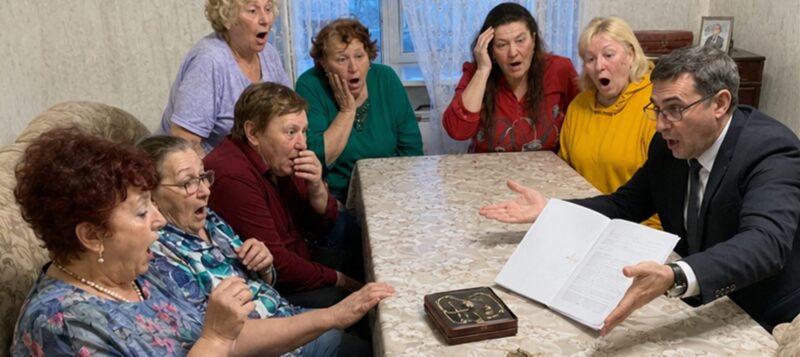
Susan bought flowers every week, placed them in her mother’s room, and loudly declared:
“Mom knows who the most caring person in this family is. Material things have never mattered to me.”
Yet in the evenings, she secretly measured the windows to decide what color curtains she would buy when the house
became hers. Carol was certain that she would receive one of the apartments in town.
“Mom never paid anything toward my education,” she said. “That apartment would simply be long-overdue justice.”
My other sister-in-law, Nancy, believed Margaret would divide everything between her sons.
“The daughters got married and already received their share,” she whispered to me one day. “The house should go to the
sons. That’s how the law works, too.”
I did not argue.
To be honest, I was not completely innocent either. For the last two years, I had been the one who mostly cared for Margaret.
I drove her to medical appointments, organized her medication, and woke up at night whenever she struggled to breathe.
Deep inside, I believed she would leave at least a small portion of her estate to me. Not because I loved her more than
everyone else, but because I believed I deserved it. Every one of us felt the same way.
Only Margaret’s twelve-year-old dog, Bruno, wanted nothing from her. He spent his days lying beside her bed and could
barely be persuaded to leave her side, even to eat.
During the final week of Margaret’s life, her room became like a place where people took turns waiting for an appointment.
Diana sat beside her in the morning, Susan came in the afternoon, and Carol visited in the evening. Each of them wanted a
few minutes alone with her.
One evening, as I walked down the hallway, I heard Diana speaking.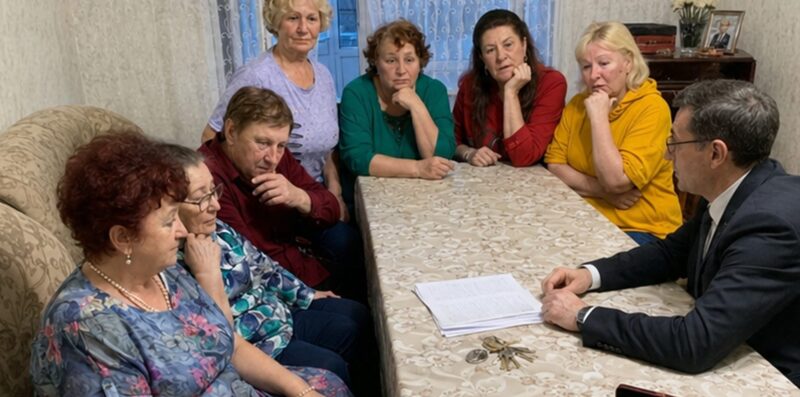
“Mom, you know this house will fall apart without me. You’ve made the right arrangements, haven’t you?”
Margaret did not answer. Another day, Nancy placed photographs of her children beside Margaret’s bed and said:
“Think about your grandchildren’s future.”
Margaret simply turned her head and gently stroked Bruno’s ear. She died three weeks later, during the night, in her
bedroom.
Everyone cried at the funeral. Yet that same evening, after we returned home, the first argument began over her gold
necklace.
“Mom promised it to me,” Susan declared.
“You’re lying! That necklace belongs to the eldest daughter,” Diana snapped.
“Wait until the will is read,” I said.
Everyone fell silent.
The reading of the will was scheduled for the following Friday.
No one in the house slept peacefully that entire week. Diana walked from room to room, deciding whom she would throw
out. Susan browsed advertisements for expensive cars. Carol had already contacted a real estate agent.
Nancy tried to convince her husband that they should sell the house as soon as they inherited it.
On Friday, we all gathered around the long table in the living room. Bruno lay beside Margaret’s empty armchair, his head
resting on his paws. The lawyer, Mr. Harris, placed a black folder on the table.
“Before we begin, I must inform you that Margaret changed her will two months before her death,” he said.
The room instantly became tense. Diana smiled confidently. She probably believed that all those mornings of bringing tea
had finally paid off.
The lawyer began to read. Margaret thanked every family member for being beside her. Then she mentioned each of us by
name. Every time someone heard their name, they held their breath. But the lawyer still said nothing about anyone’s share.
“Get to the property,” Carol said impatiently.
Mr. Harris gave her a stern look and continued.
“Margaret stated that during the final months of her life, she saw how every family member showed concern for her.
However, she also understood the real reason behind that concern.” Diana’s smile disappeared.
The lawyer placed another sealed envelope on the table.
“The house, two apartments, land, bank accounts, and all the jewelry make up an estate worth approximately two million
dollars.”
Everyone immediately sat up straighter.
“Who did she leave it to?” Susan demanded.
Mr. Harris opened the final page.
“The entire estate will be transferred to a special trust created to provide lifelong care for Margaret’s only unconditionally
loyal companion.”
For several seconds, no one understood. Then the lawyer turned and looked … The continuation read in the comments ‼️
👇‼️ toward the elderly dog lying beside Margaret’s armchair.
“The sole beneficiary is Bruno.”
The room fell completely silent.
“The dog?” Diana gasped.
“Mom left two million dollars to a dog?” Carol shouted.
Bruno raised his head and looked at us.
Then the lawyer read Margaret’s final message:
“You all came into my room to tell me what you believed you deserved. Bruno was the only one who came simply to stay beside me. You were waiting for my final breath. Every day, he prayed that I would wake up one more time.”
No one spoke again.
We all stared at the animal we had barely noticed before.
Bruno stood, walked over to Margaret’s empty armchair, and lay down beside it once more—still waiting for the one person whose wealth had never mattered to him.