I cared for her for 20 years, believing she would be grateful—But one day, I overheard what she was saying about me.
After that, I called my niece 😱💔
For twenty years, I woke up every morning to the sound of my sister’s voice.
“Martha, I’m out of water.”
“Martha, isn’t it time for my medication?”
“Martha, my legs are hurting again.”
My name is Martha. I am sixty-eight years old, and my older sister, Ellen, is seventy-two.
When Ellen was fifty-two, she became seriously ill. The doctors said she would no longer be able to live independently. At the
time, I was still working at a small hotel. I had my own apartment and a man who wanted to marry me.
But when I saw my sister lying helplessly in the hospital, I couldn’t leave her alone.
I quit my job, sold my apartment, and moved into the wooden house our parents had left behind so that I could care for her.
That same year, my fiancé left me.
“I love you, Martha, but I can’t spend my entire life waiting for you to have time for me,” he said.
I didn’t blame him. I believed family was more important than anything else.
For twenty years, I washed my sister’s clothes, prepared her meals, and woke up in the middle of the night whenever she was
in pain. I chopped firewood during the winter and grew vegetables during the summer so we could save money.
Ellen’s only daughter, Susan, lived in another city. She rarely visited us. Sometimes she called to ask about her mother’s
health and promised she would come soon. But the months passed, and she never came. Instead, she often told me:
“Aunt Martha, you’re a real angel. Mom wouldn’t have survived without you.”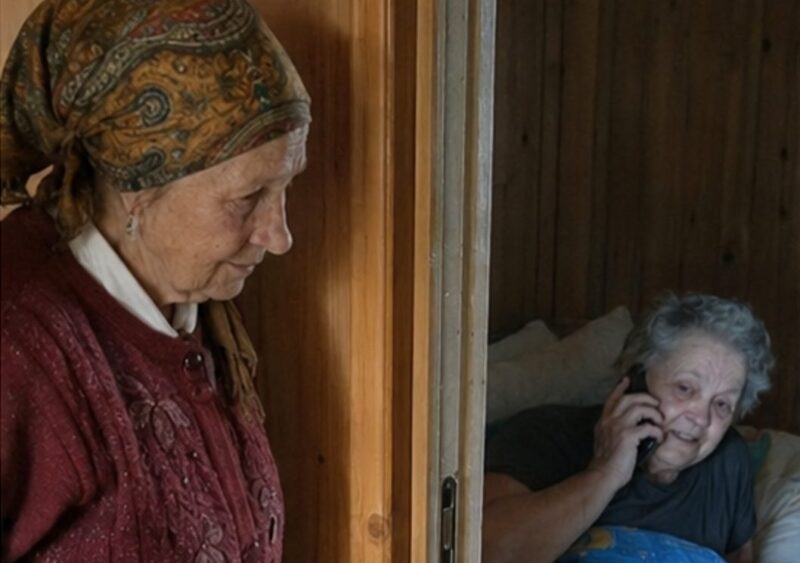
Those words gave me strength.
I never asked to be paid. Ellen’s pension covered her medication and the household expenses, while I did everything else for
free. I was certain my sister understood everything I had sacrificed for her. Until the evening when I accidentally overheard
her phone conversation.
That day, I had gone into town to buy Ellen’s medication. I returned earlier than expected because the pharmacy was closed.
I opened the front door quietly. I wanted to enter without making any noise so I wouldn’t wake my sister. But she wasn’t
asleep. I could hear her voice coming from her room. She was talking to Susan.
“Don’t worry,” my sister said. “Martha doesn’t suspect a thing.”
I stopped in the hallway.
“She thinks the house belongs to both of us,” Ellen continued with a laugh. “But according to the documents, it is in my
name alone. When I die, everything will be yours.”
I couldn’t breathe.
Our parents had always said they were leaving the house to both of us. Ellen had handled the paperwork because I had been
working abroad at the time. I had never questioned her. But the most painful part was still to come.
“And what will Martha do?” Susan must have asked.
Ellen laughed. What happened next read in the comments 👇‼️👇‼️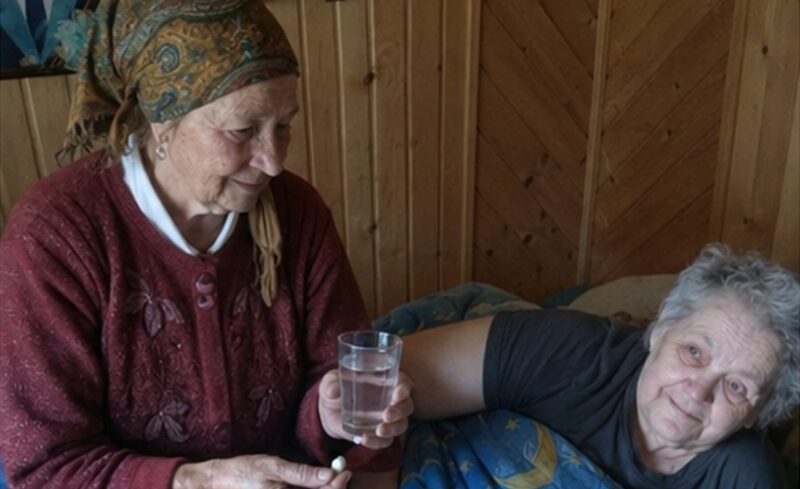
“Where could she possibly go? She has lived in my house for free for twenty years. Isn’t that enough? Besides, she doesn’t
have another life.”
The bag in my hand nearly fell to the floor. For the first time in twenty years, I understood what my sister truly thought about
me. She didn’t see me as family. To her, I was nothing more than an unpaid servant.
“When you sell the house, give her a little money,” Ellen continued. “But don’t give her too much. She doesn’t know how to
manage money. And if she discovers that I have savings, she’ll start demanding her share.”
I couldn’t listen anymore. I quietly walked outside, sat on the old bench in the yard, and stared at the empty road until
darkness fell.
I wanted to go inside and ask her how she could treat me that way. But then I realized that if I revealed what I had heard,
Ellen might hide the documents or transfer everything to her daughter.
That night, I pretended nothing had happened.
I served her dinner, placed her medication on the table, and even covered her with the blue blanket.
But when I returned to my small bedroom, I called our niece, Laura.
Laura was our late brother’s daughter, and she worked as a lawyer. We had barely spoken for years because Ellen always claimed that Laura was only interested in our property.
Now I was beginning to understand why she had tried to keep us apart.
“Laura,” I whispered into the phone, “I need your help. But Ellen must not find out.”
Laura arrived the following morning.
She told Ellen that she simply wanted to visit us. My sister welcomed her coldly and then ordered me to make tea.
When we were alone in the kitchen, Laura quietly asked:
“Have you ever seen Grandma and Grandpa’s will?”
I shook my head.
“Ellen told me there was no will.”
Laura’s expression immediately changed.
She opened her bag and placed a copy of an old document on the table.
“There was a will, Aunt Martha. Grandma left the house equally to all three of her children—you, Ellen, and my father.”
I stared at her in shock.
“Then how is the house only in Ellen’s name?”
“That’s exactly what we need to find out.”
Over the next several days, Laura investigated the old property records. I continued caring for Ellen while pretending I knew nothing.
One week later, Laura called me.
“I found it,” she said. “But you need to prepare yourself. This isn’t just unfair. It’s fraud.”
It turned out that after our parents died, Ellen had submitted two documents to the court. The first stated that our brother had surrendered his share of the property. The second claimed that I had voluntarily transferred my share to Ellen.
The document even carried what appeared to be my signature.
But on the date it had supposedly been signed, I hadn’t even been in the country.
Ellen had forged my signature.
“We can take this to court,” Laura said. “But there’s something else you need to know. My father never surrendered his share. That means part of the house also belongs to me.”
I took her hand.
“I don’t want to take away your share.”
Tears filled Laura’s eyes.
“And I don’t want them to throw you onto the street after you sacrificed twenty years of your life.”
Two days later, we sat across from Ellen.
Laura placed the copy of the will, the old property records, and the forged document on the table.
At first, Ellen turned pale. Then she became furious.
“You went through my documents!” she shouted at me.
I looked at her calmly.
“No, Ellen. I finally took control of my own life.”
She tried to convince us that she had done everything to protect the house. She said I was naïve and would have lost my share anyway. Then she began to cry, reminding us that she was ill.
Twenty years earlier, those tears would have made me apologize.
That day, they did not.
“I am not punishing you for being sick,” I said. “But your illness did not give you the right to steal my life and then laugh at me behind my back.”
When Ellen realized we had evidence, she agreed to reverse the fraudulent transfer. The house was officially divided into three shares—mine, Ellen’s, and Laura’s.
But afterward, I did something she never expected.
I stopped being her full-time caregiver.
With Laura’s help, we contacted a social worker. A professional caregiver was hired and paid from Ellen’s pension to visit her every day. I moved into the other part of the house and locked my bedroom door for the first time.
Ellen looked offended.
“You cared for me for twenty years, and now you’re leaving me with a stranger?”
“I am not abandoning you,” I replied. “I am simply no longer abandoning myself.”
A few months later, I sold my share of the house to Laura and bought a small apartment in the city.
Now, every morning, I wake up to silence. I make coffee only for myself, grow flowers beside my window, and attend painting classes twice a week.
Laura visits me often.
Recently, she asked whether I regretted taking care of my sister.
I thought for a long time before answering.
“I don’t regret being kind. I only regret believing that kindness meant allowing someone to use me.”
I still visit Ellen occasionally.
But now, when she calls from her room and demands that I run to her immediately, I answer calmly:
“Wait for your caregiver. Today, I am busy living my own life.”
It took me twenty years to understand one simple truth:
Loving someone does not mean giving them your entire life—especially when they are secretly planning to leave you without a home, without money, and without even a word of gratitude.