I took care of my father until his final day, but during the reading of the will, my name was barely mentioned 😨💔
I took care of my father until his final breath, but on the day his will was read, my brother inherited the house, the store, and
all the bank accounts. I was left with only a small piece of land on the edge of town, where nothing had grown for years.
When the lawyer read that line, my brother Daniel did not even try to hide his smile.
“Dad knew who was capable of taking care of property,” he said, closing the folder.
I said nothing. My name is Claire Morgan. I was forty years old when my father, Robert Morgan, died after a long illness.
For the last two years of his life, I practically lived at his house. I went to work in the morning, returned to him in the evening,
prepared dinner, gave him his medication, changed his bandages, and woke up several times during the night to check his
breathing. Daniel lived only twenty minutes away, but he rarely visited. He was always busy.
One time, he had an important business meeting. Another time, he had to take the children to practice. And when my father
could no longer walk without help, Daniel said: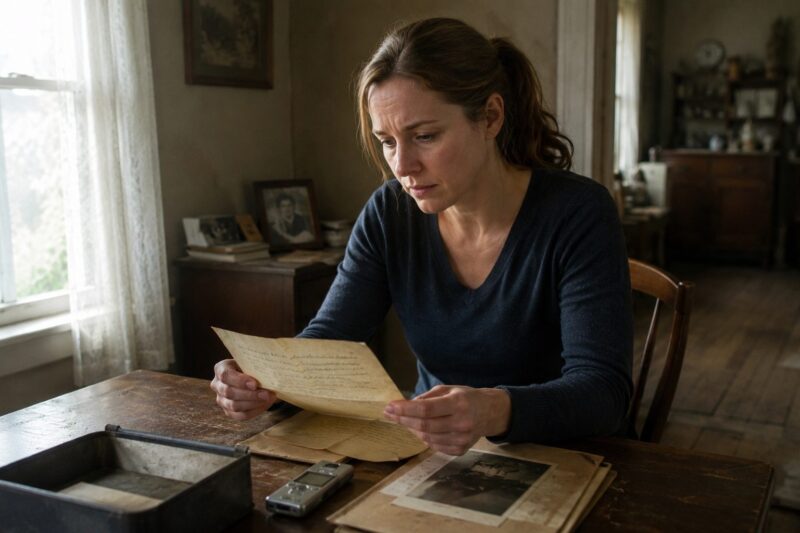
“Claire, you’re stronger when it comes to things like this. Hospitals and medicine make me feel sick.”
I did not argue. He was my brother, and my father was my father. I did not want the final months of Dad’s life to be filled with
family arguments. There was only one thing that hurt me.
My father never said thank you. Sometimes, when I helped him sit up or gave him a glass of water, he would look at me for a
long time, as if he wanted to say something. But then he would turn his eyes away and ask:
“Has Daniel called?”
One week after the funeral, we gathered in the lawyer’s office. Daniel arrived with his wife. They sat beside each other, silent
but confident. I was alone. The will was simple. The family house went to Daniel. My father’s building supply store went to
Daniel. The bank accounts and investments went to Daniel. I received the old piece of land at the end of Brookfield Road.
I could barely remember the address. When we were children, Dad occasionally took us there. It was three acres of dry land
with a collapsing wooden shed and a rusted fence. Daniel’s wife leaned toward me and whispered:
“Maybe you can make a beautiful garden there someday.”
There was no sympathy in her voice. Only victory. I signed the documents and left without looking at either of them.
Three days later, Daniel called me.
“Claire, bring me the keys to Dad’s house. And do you have any documents from the store?”
His voice was sharp, as though I had already become a stranger.
I left the keys by the door. As I walked away, I saw his wife looking through the window and pointing at the furniture they
planned to replace. That night, I cried for the first time. Not because of the house or the money.
I cried because I realized that the father whose side I had sat beside every night had apparently never truly seen me.
One week later, I decided to visit the land I had inherited.
The road was covered with weeds. The wooden gate barely opened. The shed was still standing, but part of its roof had
collapsed. Inside, there were only old tools, empty cabinets, and a dusty table.
I was about to leave when I noticed a small metal box attached beneath the table. There was no key. I had to borrow a
hammer from a neighbor. There was no money inside the box. There were three thick folders, a letter written in my father’s
handwriting, and a voice recorder. My hands began to shake when I read the first line of the letter.
“Claire, if you are reading this, then Daniel has already received everything he spent years demanding.”
I turned on the voice recorder. My father’s voice was weak, but clear. The continuation read in the comments 👇‼️👇‼️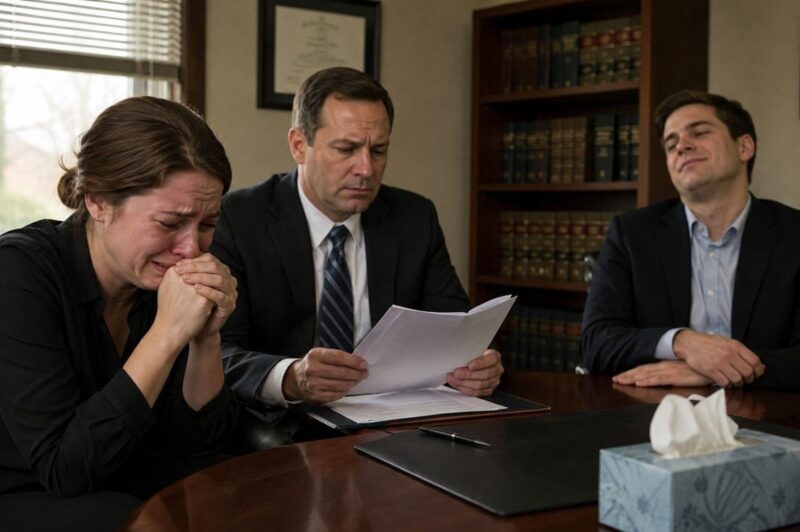
He explained that the house was mortgaged. The store had been losing money for the past three years. Most of the bank
accounts were connected to business debts and personal guarantees. Daniel did not know any of this. But my father knew
that he would never accept the land. To him, it was worthless.
Inside the second folder was a decision issued by the city. The entire Brookfield Road area had been included in a new
residential development project.
A construction company had already made offers to the landowners.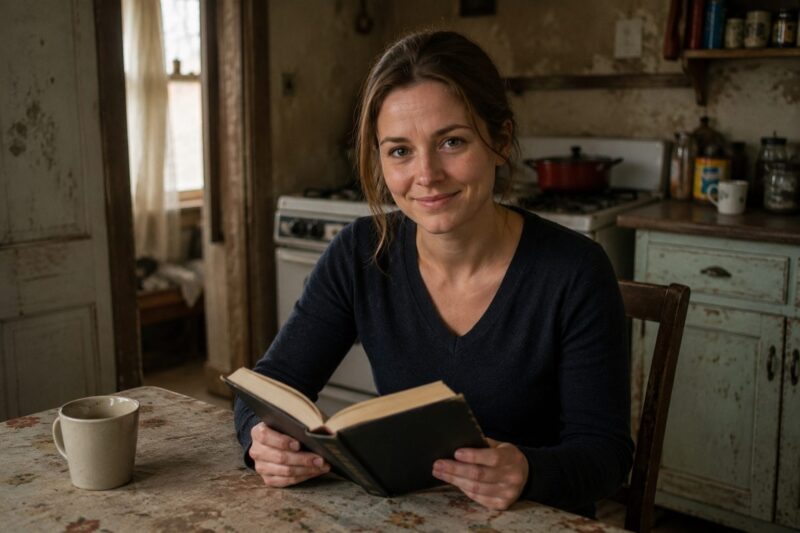
The amount offered for my three acres was greater than the true value of my father’s house and store combined.
But the final folder was the most important.
It contained a signed agreement from my father. A portion of the money from the land sale was to be transferred into a trust created in my name. The rest would go to the care center where he had received treatment.
At the end of the letter, he had written:
“You took care of me without asking for anything. Daniel spent his entire life demanding everything. I left him what he wanted. I left you what you deserved. Forgive me for not having the strength to tell you while I was still alive.”
Two days later, Daniel called again.
This time, there was no confidence in his voice.
“Claire, people from the bank came to see me. They say the store’s debts are now my responsibility. Did you know?”
I remained silent for a long moment.
Then I looked at my father’s letter, lying open on the table.
“No,” I said. “But now we both know that Dad left each of us exactly what we chose during his lifetime.”
And for the first time, Daniel had no answer.