Cop accused a black man of stealing his own car — Then the police chief saw his name and went pale 😱😨
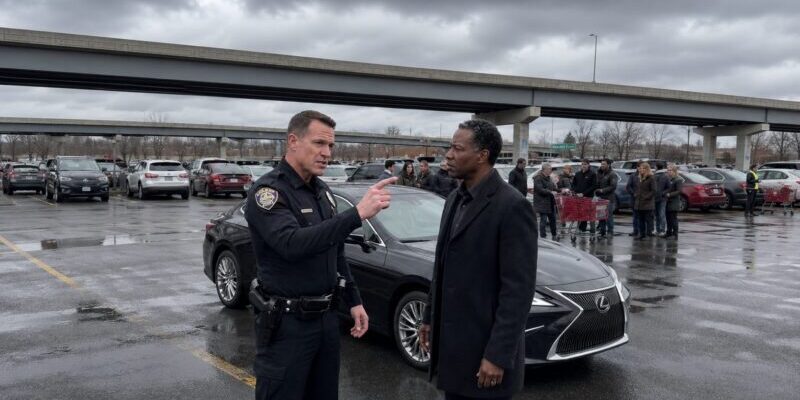
“Step away from the vehicle. That Lexus isn’t yours.”
Marcus Reed froze with one hand on the open driver’s door.
“Officer, I own this car,” he said calmly. “My registration and identification are inside. I can show you.”
Officer Derek Holloway laughed.
“You own it?”
Before Marcus could answer, Holloway grabbed him by the collar and pulled him away from the car.
“A Black man in a sixty-thousand-dollar Lexus in Westbrook?” the officer muttered. “Don’t insult me. You stole it.”
Westbrook was the kind of neighborhood where lawns looked painted, security cameras watched every driveway, and
strangers were noticed within seconds. Marcus had lived there for three weeks, but few neighbors had met him.
He had just returned from a business trip, still wearing his dark suit and carrying a leather folder he could not afford to lose.
“Please take your hand off me,” Marcus said. “You are making a serious mistake.”
Holloway shoved him against the hood. The car alarm began screaming.
A woman across the street raised her phone and started recording.
“That’s the Reed house,” one neighbor whispered. “Maybe he works for them.”
Marcus heard it. There was no family employing him.
The house, the Lexus, and everything in the garage belonged to him.
Holloway ordered him to place his hands behind his back.
Marcus did not resist. He knew how quickly a calm situation could become dangerous when an officer had already decided
who was guilty.
“My wallet is in my jacket pocket,” Marcus said. “My name is Marcus Reed.”
Holloway searched him, pulled out the wallet, and checked the driver’s license. The address matched the house behind
them. But instead of releasing him, Holloway frowned.
“Fake.”
Marcus stared at him.
“You think I made a fake license with the address of the house I am standing in front of?”
“I think men like you always have an explanation.”
A teenage boy on a bicycle whispered, “Did he really say that?”
Marcus closed his eyes for a second. Then he said quietly, “Officer Holloway, call your supervisor.”
Holloway stiffened.
“How do you know my name?”
“It’s on your badge.”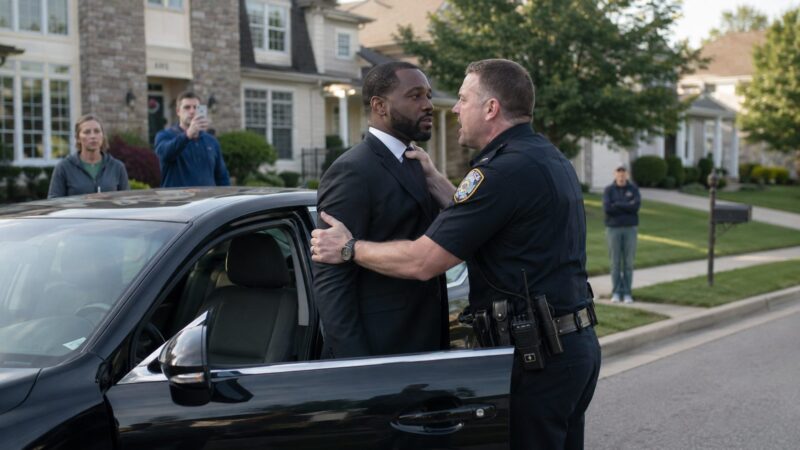
But that was not the full truth.
Marcus had seen Derek Holloway’s name before. Three times. Three complaints involving Black drivers. Three cases
dismissed because of “insufficient evidence.”
Holloway tightened the handcuffs.
“You’re under arrest for suspected vehicle theft and resisting.”
“I have not resisted.”
“You’re resisting now.”
Sirens sounded at the end of the street. A patrol car arrived, followed by a black police SUV. Captain Elena Ruiz stepped out.
She looked irritated until she saw the man in handcuffs. Then she stopped.
“Holloway,” she said slowly, “remove those cuffs.”
Holloway turned.
“Captain, I caught him with a stolen Lexus.”
Ruiz looked at the license plate, then at Marcus.
“That car is registered to him.”
“He could have forged—”
“Remove the cuffs. Now.”
Holloway obeyed. Marcus rubbed his wrists and straightened his jacket. Ruiz looked embarrassed.
“Mr. Reed, I apologize. We can explain—”
“No,” Marcus said. “You can explain at headquarters.”
Holloway laughed nervously.
“Who is he?” What happened next read in the comments 👇‼️👇‼️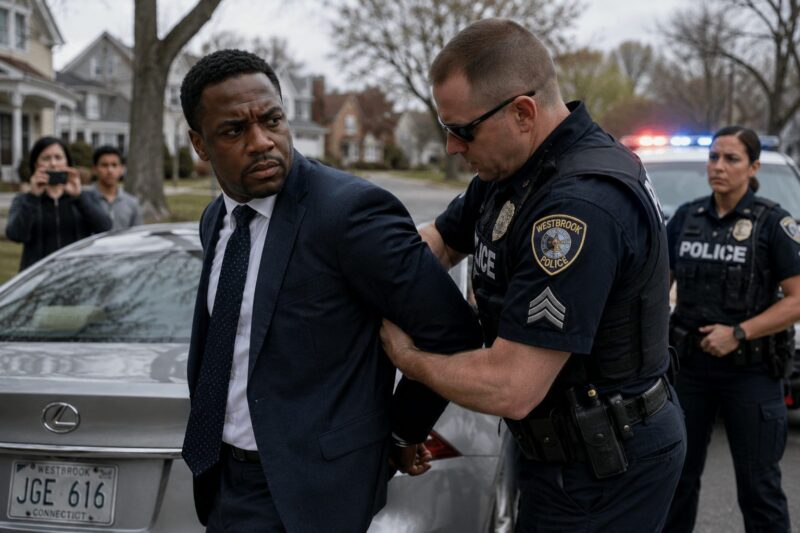
Before Ruiz could answer, another vehicle pulled up. This time, it was the police chief. Chief Samuel Grant stepped out with
the city attorney. Grant took one look at Marcus and went pale.
“Judge Reed,” he said.
The street went silent. Holloway’s mouth fell open. Marcus Reed was not only the owner of the Lexus.
He was the newly appointed federal judge assigned to oversee a major civil-rights investigation involving the Westbrook
Police Department.
The leather folder in his car contained sealed testimony, internal reports, and the names of officers accused of racial profiling.
One of those names was Derek Holloway.
Holloway stepped backward.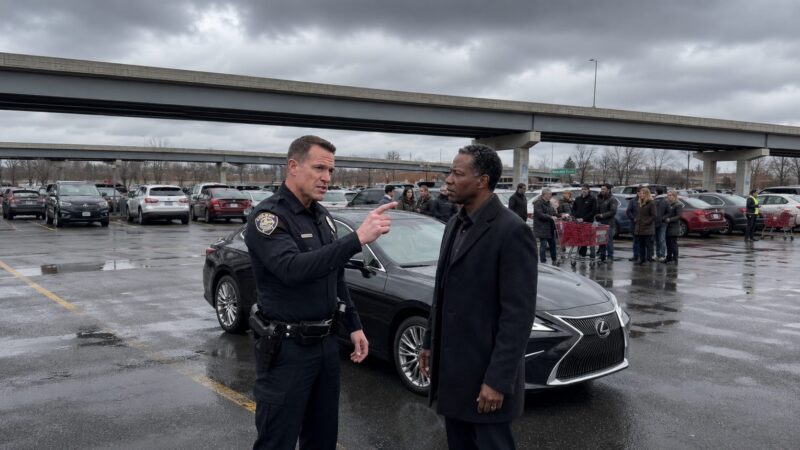
“Judge, I didn’t know who you were.”
Marcus looked at him for a long moment.
“That is exactly the problem,” he said. “You should not have needed to know who I was before treating me like a human
being.”
No one spoke.
The neighbor’s phone was still recording.
By morning, the video had spread across the city.
Holloway was suspended. The department reopened every complaint filed against him. Two other officers were investigated for helping bury earlier reports.
Marcus refused interviews.
He did not want praise.
He wanted accountability.
Weeks later, during the first public hearing, Marcus saw the same teenage boy who had watched from his bicycle. The boy sat beside his father, holding a notebook.
Marcus opened the hearing with one sentence.
“This case is not about the car I owned. It is about the dignity no one should ever have to prove they deserve.”