The son took his mother to a nursing home because his wife didn’t want to Live with her… But one week later, he opened his mother’s
old bag and froze 😱💔
When David took his mother to the nursing home, he kept telling himself that he was doing the right thing.
The whole way there, he avoided looking into her eyes. The car was silent. The only sound came from the old bag on his mother’s knees, as
]she gently pressed her fingers against it.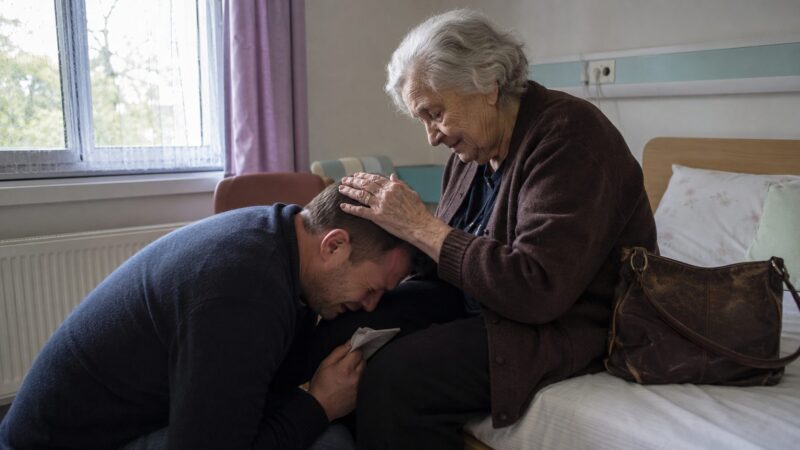
“Mom, they’ll take good care of you here,” David said, trying to keep his voice calm. “It had become difficult at home.”
His mother, Mrs. Mary, smiled. That smile cut David’s heart because there was no blame in it, no complaint. Only tiredness.
“I know, son,” she said. “The important thing is that you feel peaceful.”
David turned his head toward the window. He did not want to hear those words. It would have been easier if his mother had gotten angry,
cried, and said, “How can you leave me here?” But his mother said nothing.
It had all started three months earlier.
David’s wife, Lily, no longer hid her dissatisfaction.
“I can’t live with your mother anymore,” she said every evening. “She is disturbing our life. The children can’t grow up freely. The house
always smells like sickness.”
“She is my mother, Lily.”
“And am I your wife or not?”
That question always silenced David.
He loved his wife. He had two children, loans, work, and exhaustion. And his mother… his mother had become a burden, something he was
ashamed to think about, but still thought about.
Mary did not ask for much. Tea in the morning, her medicine on time, and sometimes a few minutes of conversation. But for Lily, even that
was too much.
One evening, when David came home from work, he saw his mother sitting on the small kitchen chair. In front of her was cold soup.
“Why haven’t you eaten, Mom?”
His mother became confused.
“I wasn’t hungry.”
But little Nare innocently said,
“Grandma was waiting for all of us to finish so she could eat afterward. Mommy said she should eat in the kitchen so she wouldn’t take up
space at the table.”
Lily gave the child a sharp look. David heard it. He heard it and said nothing. The next day, he called the nursing home. One week later, Mary
was already there.
The room at the nursing home was small but clean. His mother placed her bag beside the bed and gently touched the blanket with her
hand, as if she were touching her new life.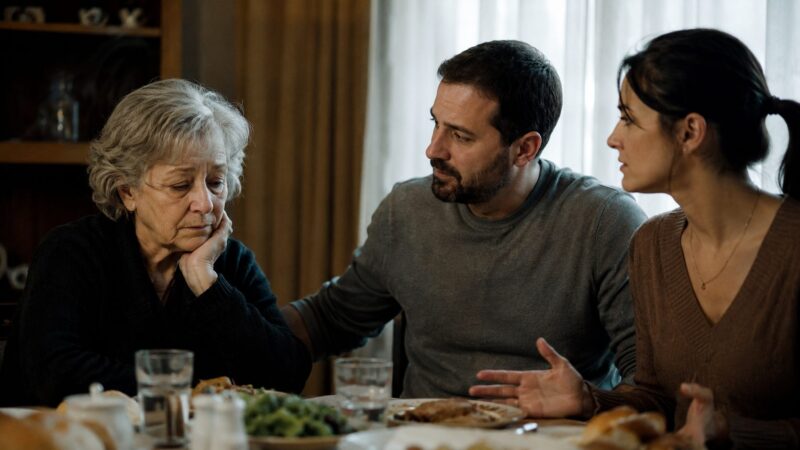
“Do you need anything, Mom?”
“No, son. Only… if you can, bring the children sometimes. I miss hearing their voices.”
David nodded, but he did not promise.
On the way home, he felt a strange relief. There was no more tension in the house. Lily hugged him.
“You made the right decision. Now our family can finally live in peace.”
But that peace did not last long.
On the third day, Nare asked,
“Dad, when is Grandma coming home?”
“She lives there now, sweetheart.”
The little girl stayed silent for a long time, then said,
“But Grandma said her home is wherever you are.”
David could not answer. One week later, the nursing home called.
“Mr. David, your mother asked you to bring her old bag. She says it was accidentally left in your car.”
David looked at the bag lying in the corner. It had stayed in the hallway all week. No one had opened it.
“I’ll bring it,” he said.
But before leaving, for some reason, he opened the bag. Inside there was an old shawl, a few medicines, a small prayer book, and a worn
envelope. On the envelope, it was written:
“For my David, when I can no longer speak.” The continuation read in the comment 👇‼️👇‼️
David’s fingers went cold. He opened the envelope.
The first thing inside was a photograph. He was three years old, lying in a hospital bed. His mother was young, frightened, but smiling.
Then there were documents. Papers showing a loan had been paid off. David’s house loan. The very house where he now lived with Lily and
the children. He did not understand.
Then he found bank transfer receipts. Every month, large amounts of money had been sent from his mother’s account to David’s bank
account. For years. When he had lost his job, when the child was born, when they had hospital expenses. At the end, there was a letter.
“My son, if you are reading this, it means I was no longer able to explain everything to you. I never wanted you to feel guilty. When you were
little, doctors said you might not survive. I sold my father’s house so I could pay for your treatment. When you grew up and started a family, I
promised myself that I would never become a burden to you.
In recent years, I knew Lily did not love me. I heard her words, but I stayed silent because I did not want your home to fall apart. The day she
said I was useless, it hurt, but it did not surprise me.
I ask only one thing. Never teach your children that an old person is a burden. One day, they will look at you the same way you looked at me
in the car that day. I do not blame you. Your mother. David’s eyes filled with tears. He pressed the letter to his chest and, for the first time,
cried out loud. At that moment, Nare came closer.
“Dad, is that Grandma’s letter?”
David got down on his knees and hugged his daughter.
“Yes, sweetheart.”
“Are we going to bring her home?”
David closed his eyes. For years, his mother had kept a home for him, and he had not kept a place for her in his own home. He took the car
keys. When he reached the nursing home, his mother was sitting by the window. Her old prayer book was in her hands. David walked in and
stood by the door.
“Mom…”
Mary turned around. She smiled with the same kind smile.
David came closer, knelt in front of her, and placed his head in his mother’s hands.
“Forgive me. We’re going home.”
His mother stayed silent for a long time. Then she gently stroked his hair with her fingers, just like she had when he was a child.
“I am already home, son,” she whispered. “You came.”
That day, David understood the most painful truth. Sometimes we leave our elderly parents alone, thinking we are freeing ourselves from a
burden. But in reality, we are leaving behind the only person who never left us throughout our entire life.