“Shave Her Head,” the cops laughed… Make her remember this cell.” The cops laughed… but the next morning happened
something that shocked everyone 😱💔
Just a quiet woman in a dark coat, holding a folder against her chest, watching the protest from a distance.
People were chanting. Reporters were filming. Mothers held signs. Students stood shoulder to shoulder, demanding justice
for a young man whose arrest had shaken the entire county.
The woman did not shout. She did not push forward. She only lifted her phone and began recording. That was all it took.
Two officers broke away from the line and walked straight toward her.
“Phone down,” the taller one snapped.
The woman looked at him calmly.
“I’m standing in a public space.”
The second officer stepped closer.
“You think you know the law?”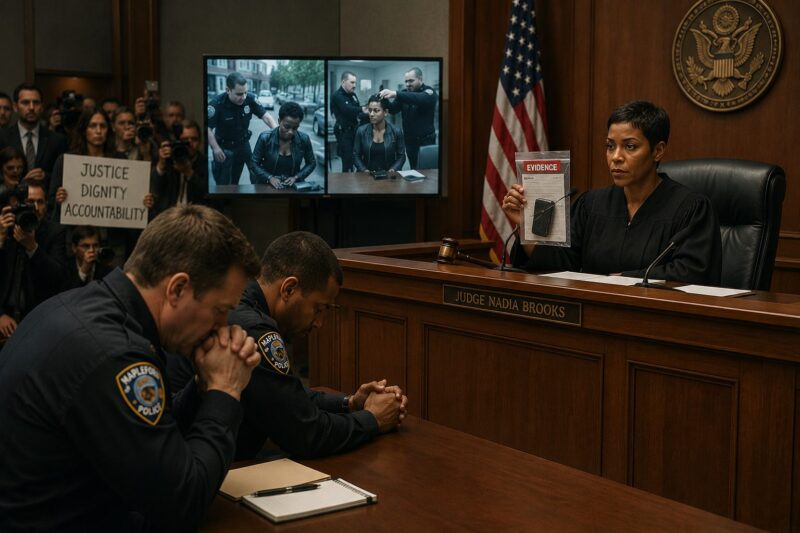
Her eyes stayed steady.
“I know enough.”
Something in her calm voice irritated them more than shouting ever could. The first officer grabbed her wrist. Her phone
almost slipped from her hand. She instinctively pulled back.
“Resisting!” he shouted.
The crowd gasped.
“She didn’t do anything!” someone yelled.
But the officers were already moving fast. They shoved her against the patrol car. Metal handcuffs snapped around her
wrists. For the first time, the woman spoke louder.
“You need to check who I am.”
The officer laughed.
“Everybody says that.”
The second officer smirked.
“Then she can tell her courthouse friends she spent the night in jail.”
They pushed her into the back seat. At the jail, the humiliation became worse. She gave her name. She asked for a
supervisor. She asked for a lawyer. No one listened. To them, she was just another woman who had dared to speak calmly
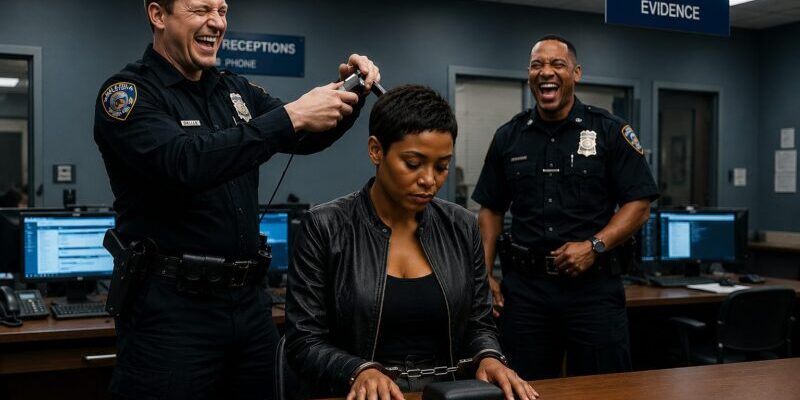
when they expected fear. Then a female detention officer walked in with clippers.
The woman’s face changed for the first time. Not fear. Warning.
“What are those for?” she asked.
“Lice protocol,” the officer said coldly.
“No inspection was done. No medical order exists. No paperwork has been signed.”
The men outside the holding area laughed. One of them leaned near the bars and said,
“Shave it all.”
Another voice added,
“Make her remember this cell.”
The clippers turned on. The buzzing filled the room. A lock of her hair fell to the concrete floor. Then another. Then another.
The woman did not cry. She stared straight ahead, breathing slowly, as if memorizing every voice, every face, every second.
They wanted her broken. They wanted her begging. Instead, when the last strand fell, she lifted her chin and whispered,
“Tomorrow, you will understand what you just did.”
The officer laughed again.
“Tomorrow, you’ll still be nobody.” What happened next read in the comments ‼️👇‼️👇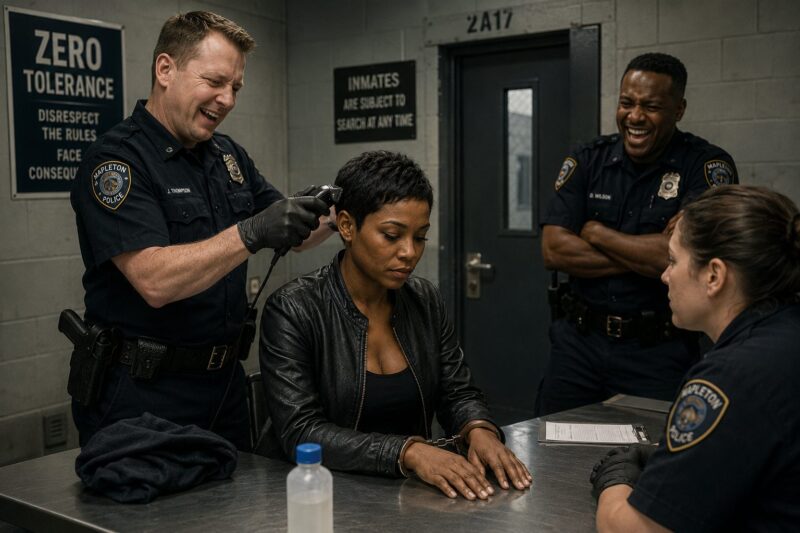
But at 6:00 the next morning, everything changed.
A commander entered the corridor holding a file.
He looked at the woman.
Then at the file.
Then back at her shaved head.
His face went pale.
“Who processed her?” he demanded.
No one answered.
Fifteen minutes later, the laughing stopped.
Officers moved quickly. Doors opened. Voices dropped. Someone brought her belongings in a paper bag.
Her phone.
Her wallet.
Her broken hair tie.
The sergeant could barely look at her.
“You’re free to go,” he said.
The woman took the bag calmly.
“No,” she replied. “Now the record begins.”
That same morning, the courtroom was packed.
Reporters filled the back rows.
Lawyers whispered.
Police officials sat stiffly at the front.
The two officers who had laughed the night before were there too, suddenly silent.
They expected a hearing.
They expected paperwork.
They expected damage control.
Then the side door opened.
Everyone turned.
The woman from the jail walked in.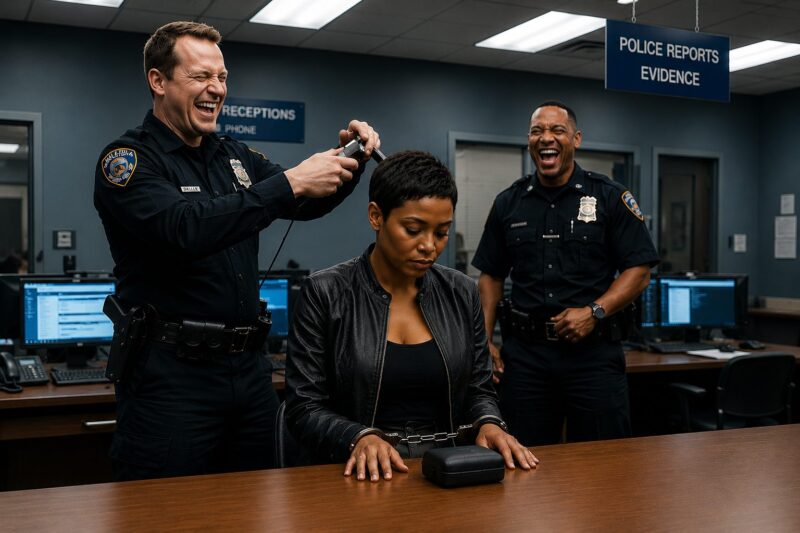
Her head was shaved.
Her face was calm.
And over her shoulders was a black judicial robe.
The entire courtroom froze.
The bailiff’s voice shook slightly as he announced,
“All rise.”
Only then did the officers understand.
The woman they had mocked…
The woman they had arrested…
The woman they had shaved in a cell…
was Judge Nadia Brooks.
She took her seat at the bench.
She did not yell.
She did not smile.
She did not mention revenge.
She simply opened the file in front of her and said,
“Let us begin with the facts.”
Then the video played.
The courtroom watched her standing peacefully on the courthouse steps.
Phone in hand.
Not shouting.
Not touching anyone.
Not interfering.
Then came the officer’s voice:
“Resisting!”
Judge Brooks looked at the witness.
“Show this court the moment where I resisted.”
Silence.
The officer swallowed.
“It may not be visible from that angle.”
Nadia leaned forward.
“The law does not punish people for what may have happened outside the evidence. The law deals with what can be proven.”
Then came the jail footage.
Missing minutes.
Disabled body cameras.
No written lice report.
No medical inspection.
No supervisor approval.
And finally, the audio.
“Shave it all. Make her remember this cell.”
No one moved.
No one whispered.
Even the officers lowered their eyes.
Judge Brooks closed the folder slowly.
“This courtroom is not a place for revenge,” she said. “It is a place for truth. And when power is used to humiliate someone, the question is no longer whether one officer made a mistake. The question is how many times the system allowed it before someone finally had proof.”
That day, everything began to fall apart.
Old complaints were reopened.
Disabled cameras were investigated.
Other victims came forward.
The officers who thought the jail walls would protect them learned the truth too late.
Some people can be humiliated.
But they cannot be erased.
Months later, Judge Nadia Brooks stood again on the courthouse steps.
Her hair was still short now.
But this time, it was her choice.
A reporter asked,
“Do you forgive them?”
Nadia looked at the courthouse doors behind her.
Then she said,
“This was never only about me. It was about every person who was told they were nobody.”
Then she walked back inside.
Because they had taken her hair.
They had taken one night of her freedom.
But they had not taken her voice.
And they had not taken the law from her hands.