When I lost my job after 25 years, my children forgot my phone number… until they heard about the inheritance my
cousin left me 😱💔
I am 75 years old. My name is Carmen.
I live in a small two-bedroom apartment in Valladolid, in the same old building where my husband Antonio and I once
painted the walls ourselves because we could not afford professionals. Antonio died nine years ago. Since then, the
apartment has been quiet. But I never felt completely useless, because I still had my job.
For twenty-five years, I worked in a public school cafeteria. I woke up at five every morning, prepared soups, served lunches,
wiped tables, and smiled at children who sometimes forgot to say thank you.
My hands hurt. My legs swelled. My back burned. But I felt needed. Until the day my manager called me into her office.
She did not look me in the eyes.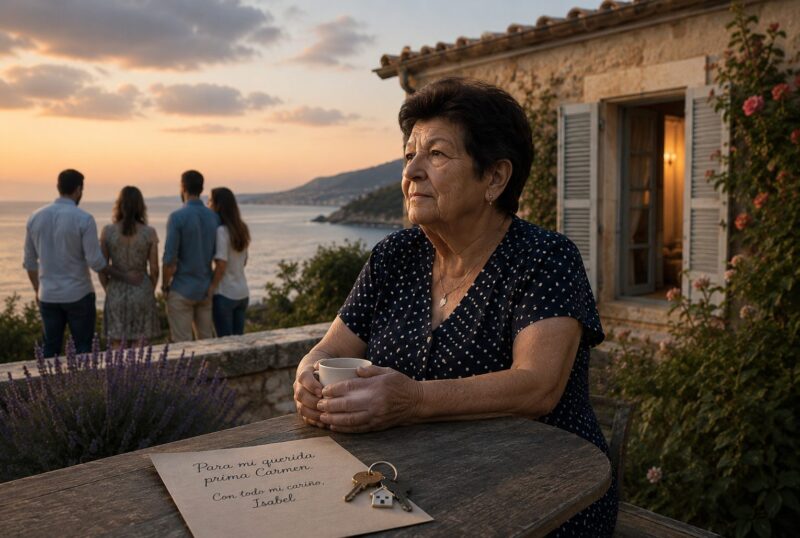
“Carmen,” she said softly, “you have been wonderful here. But things are changing. We need younger, faster people.”
Younger. That word followed me home like a stone in my chest. That evening, I sat in my kitchen and stared at my hands.
These hands had raised two children. Cared for a dying husband. Cooked thousands of meals for other people’s children.
And now, suddenly, they were too old. The first person I called was my son, Javier.
“Mom, I can’t talk right now,” he said quickly. “I’ll call you tonight.”
He never did. Then I called my daughter, Laura.
“Oh, Mom, don’t be dramatic,” she sighed. “Everyone is going through something. I’m overwhelmed this week.”
After that came the silence. At first, I made excuses for them. They are busy. They have families. They have responsibilities.
But deep down, I knew the truth. They used to come when they needed me.
Javier came when he needed money before payday. Laura brought the children when she wanted a weekend away with her
husband. I never refused. Even when I was tired. Even when my knees hurt. Even when I had only enough money left for
bread and medicine. But when I lost my job, I did not need money.
I needed someone to say:
“Mom, we are here.”
No one did. One Sunday, I baked an apple pie. Laura’s favorite. I called her.
“Why don’t you come over? I made pie.”
She sighed.
“Mom, we can’t visit you every weekend. The children have their own lives.”
Their own lives. I hung up. Then I took the warm pie and threw it into the trash. Not because it was bad. Because there was
no one left to eat it.
Months passed. I learned how to live with silence. I bought the cheapest vegetables at the market. I saved on heating during
winter. At night, I covered myself with Antonio’s old blanket and pretended it was enough.
My children called only on birthdays and holidays. Short calls. Cold calls. The kind people make when they want to feel less
guilty. Then my cousin Isabel died.
She had lived near Santander, in a small house by the sea. She had no children. We had been close when we were young,
though in recent years we had seen each other less. After the funeral, a notary called me.
“Mrs. Carmen Ruiz,” he said, “your cousin Isabel left you her seaside house and part of her savings.”
I did not feel joy. I felt stunned. I thought of Isabel’s rose bushes. Her old terrace. The sound of the sea near her windows.
And then, somehow, my children found out. Javier called first. His voice was warm for the first time in years.
“Mom… I heard Isabel left you something.”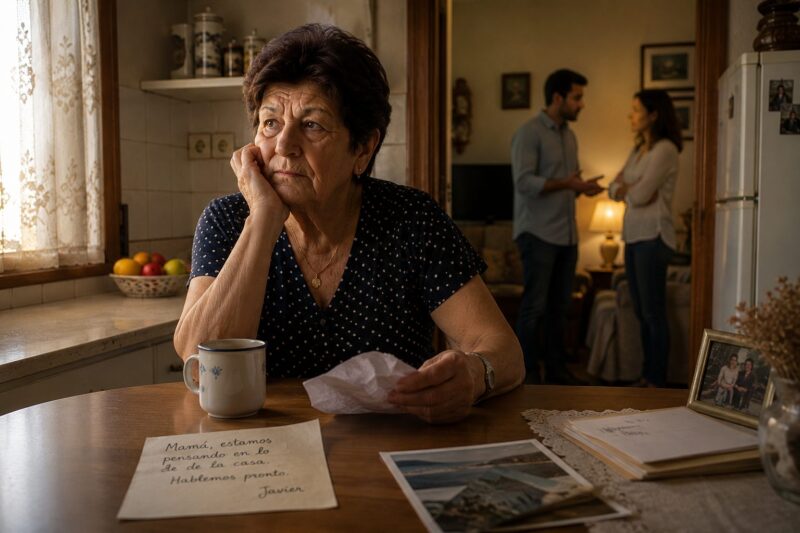
“Yes,” I said. “A house.”
“A house?” He went silent for a moment. “Well, that’s wonderful. We should all go see it. You know, we were thinking of
finding a summer place.”
The next day, Laura called.
“Mom, why didn’t you tell us? We are family. These things should be discussed together.”
When I was crying alone in my kitchen, there was no together. When I waited by the window with my phone in my hand,
there was no together. When I fell asleep on Christmas Eve with the television still on, there was no together.
But when a house and money appeared, suddenly we were family again. That weekend, they came. Both of them.
With their spouses. With flowers. With a cake. Laura hugged me so tightly I almost believed it.
“Mom, you’ve lost weight,” she whispered. “We need to take better care of you.”
Javier sat at the table and pulled out papers.
“Mom, we need to organize everything properly. You are seventy-five. It would be better to put the house under our names
now, to avoid problems later.”
I listened quietly. They talked about value. Renting it to tourists. Selling it. Splitting money. Nobody asked what I wanted.
Nobody asked what Isabel had meant to me. That evening, I went to the kitchen to make tea. The living room door was half
open. And then I heard Javier’s voice.
“We need to do this quickly before Mom changes her mind. She’s kind, but naïve.”
Laura answered in a lower voice.
“Don’t push too hard. She has to think it was her idea.”
The cup trembled in my hand. Hot water spilled over my fingers. But I did not scream. I just stood there, staring at the wall,
finally understanding everything. They had not come back for me. They had come for what I owned. The next morning,
Javier said: The story continuation read in the comments 👇‼️👇‼️
“Mom, we should visit the house together.”
I looked at him calmly.
“No. I will go alone.”
He frowned.
“Alone? Mom, you’re seventy-five.”
“Yes,” I said. “That is exactly why I want to decide for myself while I still can.”
Laura looked offended.
“You’re acting strange.”
For the first time in years, I did not apologize.
“No,” I said. “I am acting like someone who is still alive.”
A week later, I went to the notary.
I did not put the house in my children’s names.
I donated part of Isabel’s savings to the nursing home where Antonio had spent his final days.
I kept the rest.
Then I renovated the seaside house.
When my children found out, the accusations began.
“You’re punishing us!”
“We are your children!”
“You would give money to strangers before your own family?”
I listened without crying.
Then I said:
“You remembered you were my children only when the inheritance appeared. But I was your mother when no one needed me.”
Laura began to cry.
Maybe from shame.
Maybe from anger.
Javier slammed the door.
Today, I spend spring and summer at Isabel’s house.
I planted lavender in the garden. I repaired the terrace. I bought a small radio for the kitchen.
Sometimes, at night, I sit outside and think of my children.
Of course it hurts.
A mother’s heart is not made of stone.
But I have learned something very late in life.
Love that appears only when money appears is not love.
And for the first time in my life, I stopped betraying myself.
So tell me…
Is a mother really obligated to give everything to her children, even when the only thing they remember about her is what she owns?