The Woman Who Called Michelle Obama an Ape Was Hiding an $18,000 Secret 😨
The night Pamela Taylor wrote the post that would change her life forever, she was sitting alone in her small West Virginia
home, scrolling through Facebook while television channels endlessly discussed the recent presidential election.
Outside, rain tapped softly against the windows. Inside, the glow of her computer screen reflected in her eyes as comment
after comment flooded social media. Politics had divided the country like never before. People insulted each other openly,
shared anger publicly, and competed to say the cruelest things for attention. Pamela wanted to join that noise.
At first, she hesitated. Her fingers hovered above the keyboard. But then a dangerous feeling took over — the belief that
online words had no real consequences.
With a smirk on her face, she typed a sentence mocking former First Lady Michelle Obama, comparing her to an ape. Then
she pressed “Post.”
For a few minutes, nothing happened. Then the notifications started exploding. Likes. Laughing emojis. Comments. Shares.
Pamela leaned back in her chair, strangely satisfied. To her, it felt like victory. People were noticing her. Supporting her.
Encouraging her ugliness as if cruelty itself had become entertainment. But by the next morning, everything had changed.
Her phone would not stop ringing.
News stations picked up screenshots of the post. Social media users across America reacted with outrage. Television hosts
condemned the comment. Civil rights organizations demanded accountability. Within hours, Pamela’s face had spread
across the internet faster than she could comprehend. Neighbors whispered about her. Coworkers stared at her differently.
Reporters appeared outside government buildings waiting for statements. America was furious. At first, Pamela tried to
defend herself.
“It was just a joke,” she told someone quietly.
But the country no longer saw it that way.
The public pressure became so intense that she was suspended from her position as Clay County development director. For
the first time in years, Pamela began to feel something unfamiliar: Fear. Not fear for what she had said. Fear of losing
comfort, reputation, and control.
Still, after several weeks, the attention slowly faded. News channels moved on to other scandals. The cameras disappeared.
Pamela eventually returned to work. To many people, it seemed like the story was over.
But it wasn’t. Because while America argued online about racism and hate, federal investigators were quietly uncovering
something even darker behind the scenes. The continuation read in the comments ‼️👇‼️👇
Months earlier, severe flooding had devastated parts of West Virginia. Families lost homes. Elderly people lost medicine,
clothing, and treasured memories. Parents struggled to feed children while entire communities waited desperately for
federal disaster assistance through FEMA.
For many victims, that money meant survival. But investigators began noticing suspicious financial activity connected to
relief funds. Documents didn’t match. Claims raised questions. Thousands of dollars had seemingly vanished.
The deeper investigators looked, the more disturbing the truth became. At the center of it all stood Pamela Taylor.
According to federal authorities, she had fraudulently obtained more than $18,000 in FEMA disaster benefits — money
meant for struggling flood victims.
When the news became public, the reaction was explosive. People who remembered her racist Facebook post were stunned
by the hypocrisy.
“She mocked others while stealing from disaster victims?”
“She judged people publicly while secretly committing fraud herself?”
Social media erupted once again, but this time the anger was even stronger.
Pamela had become a symbol of something larger — the collision of hate, arrogance, and greed.
Soon, federal court proceedings began.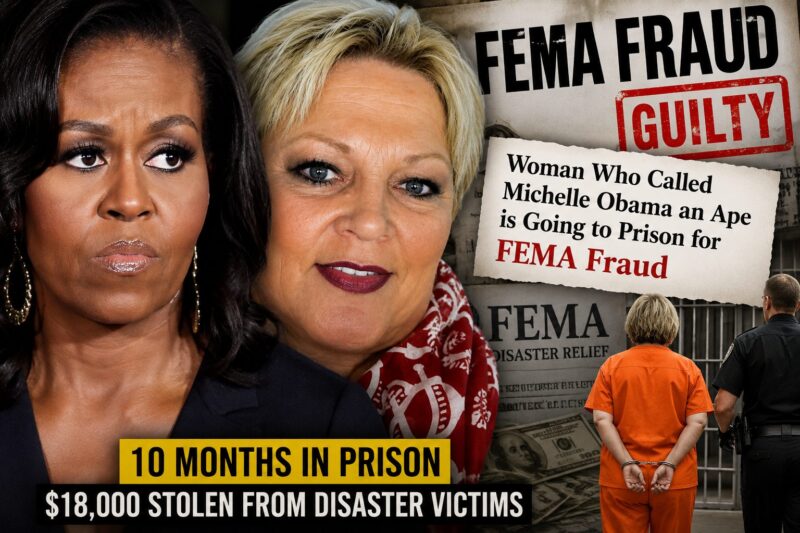
The confident woman who once wrote cruel jokes online now entered courtrooms surrounded by silence and cameras.
Witnesses described her as nervous, pale, and withdrawn. Gone was the smug expression from the Facebook photo that had
once spread across the internet. Now she avoided eye contact completely.
Inside the courtroom, prosecutors detailed the fraud carefully. Every document. Every payment. Every false claim tied to
disaster relief money intended for suffering families. The atmosphere was heavy.
Some people in the courtroom shook their heads quietly as the evidence piled higher and higher. For flood victims watching
the case unfold, it felt personal.
While they struggled to rebuild homes destroyed by nature, someone entrusted with public responsibility had allegedly
stolen aid for personal benefit.
Then came sentencing day. Pamela stood before the judge in complete silence. No smiling supporters. No online applause.
No Facebook reactions. Only consequences.
The judge sentenced her to 10 months in federal prison, ordered financial penalties, home confinement after release, and
years of supervised supervision. The room fell silent.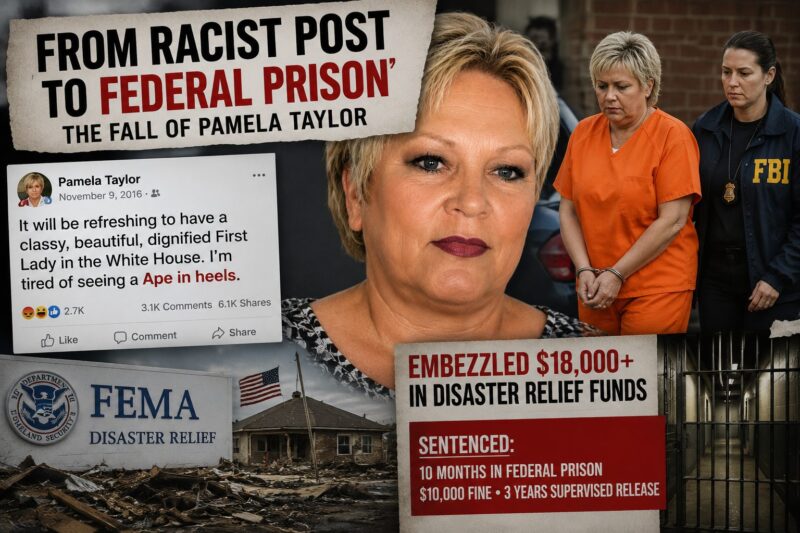
For a brief moment, Pamela closed her eyes as if finally realizing how far everything had spiraled from that single moment at
her keyboard years earlier. But outside the courthouse, people continued debating the story. Some called it karma.
Others said it was justice. But many believed the story carried a deeper lesson.
Hatred often begins with words people think are harmless. A cruel joke. A public humiliation. A moment of arrogance posted
online for attention. But character eventually reveals itself everywhere — not only in speech, but in actions hidden behind
closed doors.
And in the end, the woman who once tried to publicly strip another person of dignity ended up watching her own
reputation collapse before the eyes of an entire nation.