She Tried to Humiliate a Poor Boy… and Lost Everything Instead 😱😨
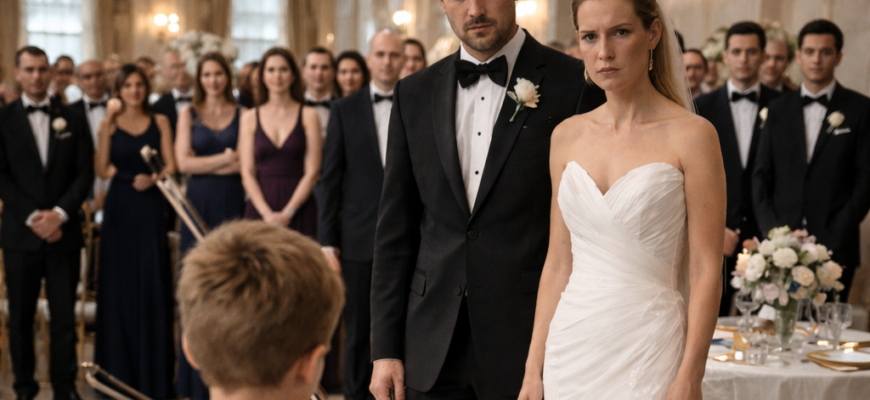
The violin shattered against the boy’s head, and the ballroom fell silent. Ten-year-old Elias dropped to one knee, blood running down his temple—but instead of crying, he reached for the broken violin. Not because it was his. Because it was borrowed. And because he needed the money. He had been hired last-minute to play at the wedding to help pay for his mother’s medical treatment. He played well—until he missed one note. Just one. The bride, obsessed with perfection,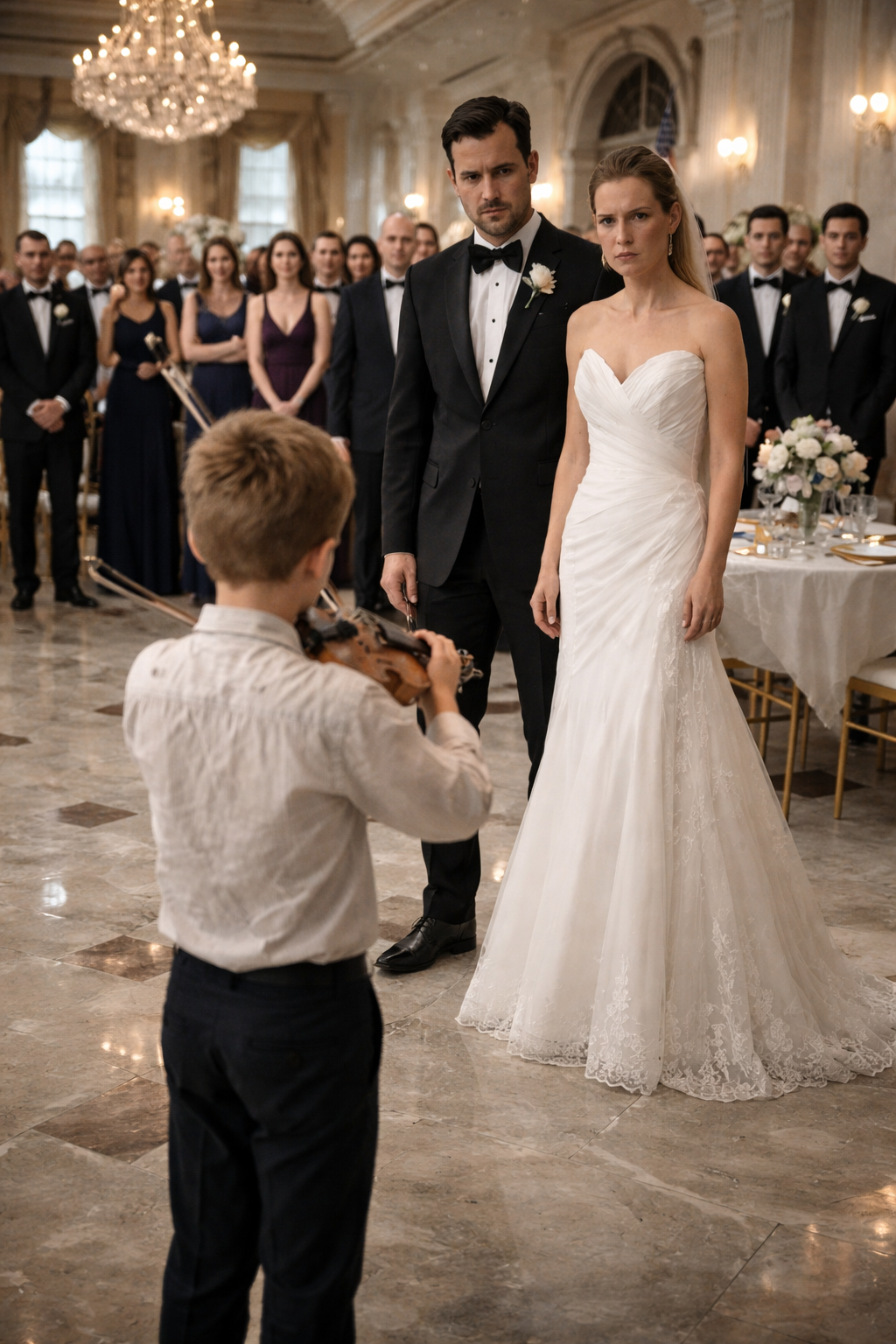 snapped. In front of everyone, she grabbed the violin and struck him with it. No one moved. Not the guests. Not the staff. Not the powerful people in the room who knew it was wrong—but stayed still anyway. Then the groom, Adrian, walked in. He saw the bleeding child, the broken instrument, and the fear in Elias’s voice as he begged not to lose his payment. Adrian knelt beside him, furious but controlled, and called for help.
“What happened here?”
No one answered. The bride spoke instead, cold and sharp.
“He ruined the moment.”
Adrian looked at Elias—shaking, apologizing, still trying to protect the violin—and something in him hardened. Then his sister Sophie stepped forward, staring at the boy’s wrist, at a small thread tied there. Recognition hit her. Years earlier, she had nearly drowned, and a boy had saved her life before disappearing. That boy was Elias. The room shifted. This wasn’t just a mistake anymore. This was someone who had once given everything to save a life—and was now treated like nothing. Still, the bride refused to take responsibility.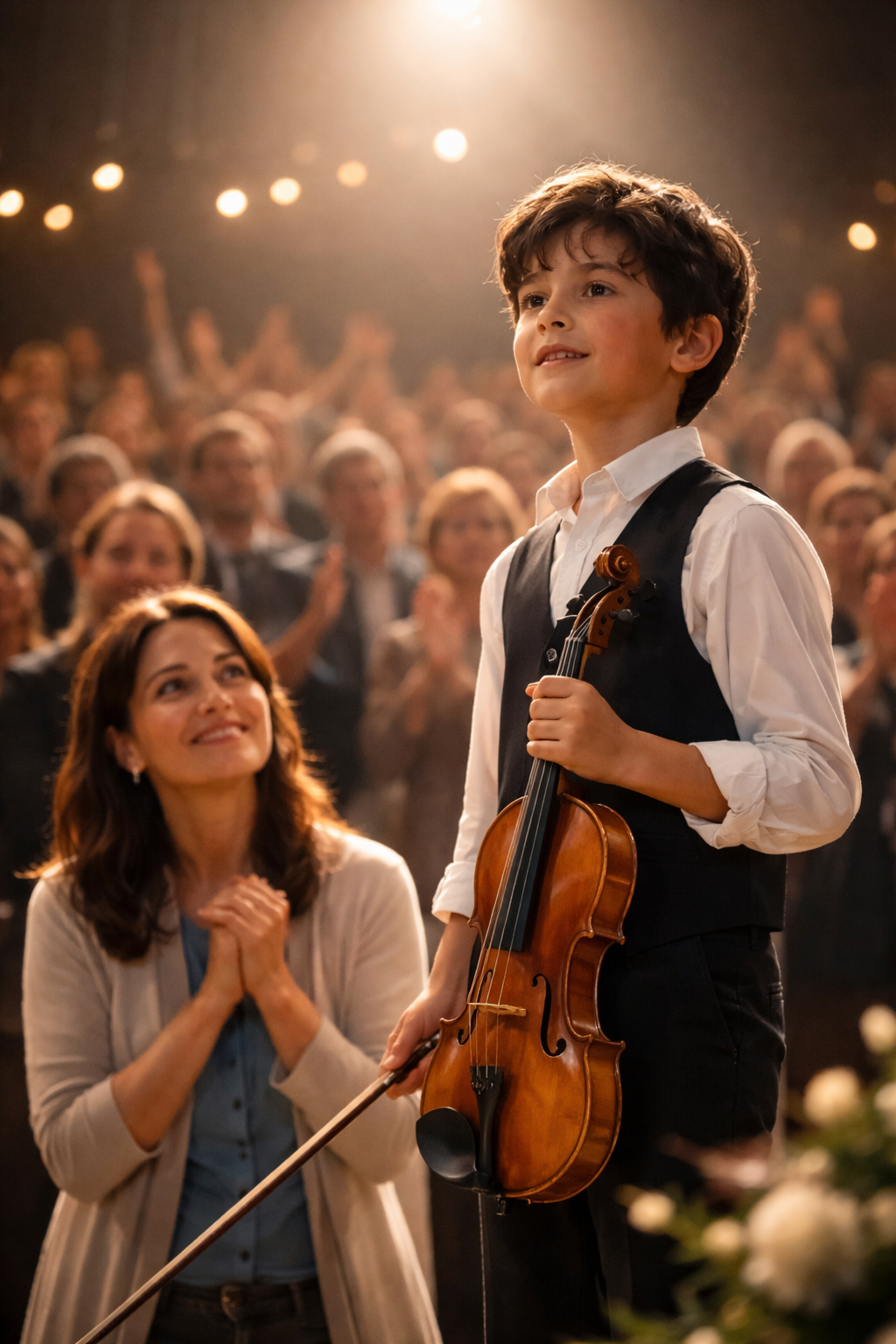
“He failed his job.”
That was enough. Adrian slowly removed his wedding ring and placed it on the table.
“There is no marriage.”
The words landed heavier than the silence before them. The wedding ended right there. Upstairs, Elias sat while a medic treated his wound. Even then, his biggest fear wasn’t the pain—it was losing his payment. His mother needed the money. Adrian stood nearby, watching the boy struggle to stay composed.
“You’re getting paid. All of it.”
Elias shook his head, eyes filled with something stronger than fear.
“I don’t want charity.”
Adrian answered quietly.
“This isn’t charity. It’s overdue.”
Soon after, Elias’s mother Mariah arrived. She rushed to her son, checking him, holding him, then looking up with steady eyes.
“Did my son do anything to deserve being hit?”
“No.”
“Then what happened belongs to the adults—not to him.”
She refused pity but accepted fairness. In the days that followed, the truth spread. The bride faced consequences, and the silence of the room became part of the story. Adrian made one thing clear.
“A child shouldn’t need status to be treated like a human being.”
Meanwhile, Elias returned to the violin. At first, he played carefully, like every note needed permission. One evening, his mother listened quietly, then stopped him.
“Play that again.”
He did.
“There. You stopped apologizing.”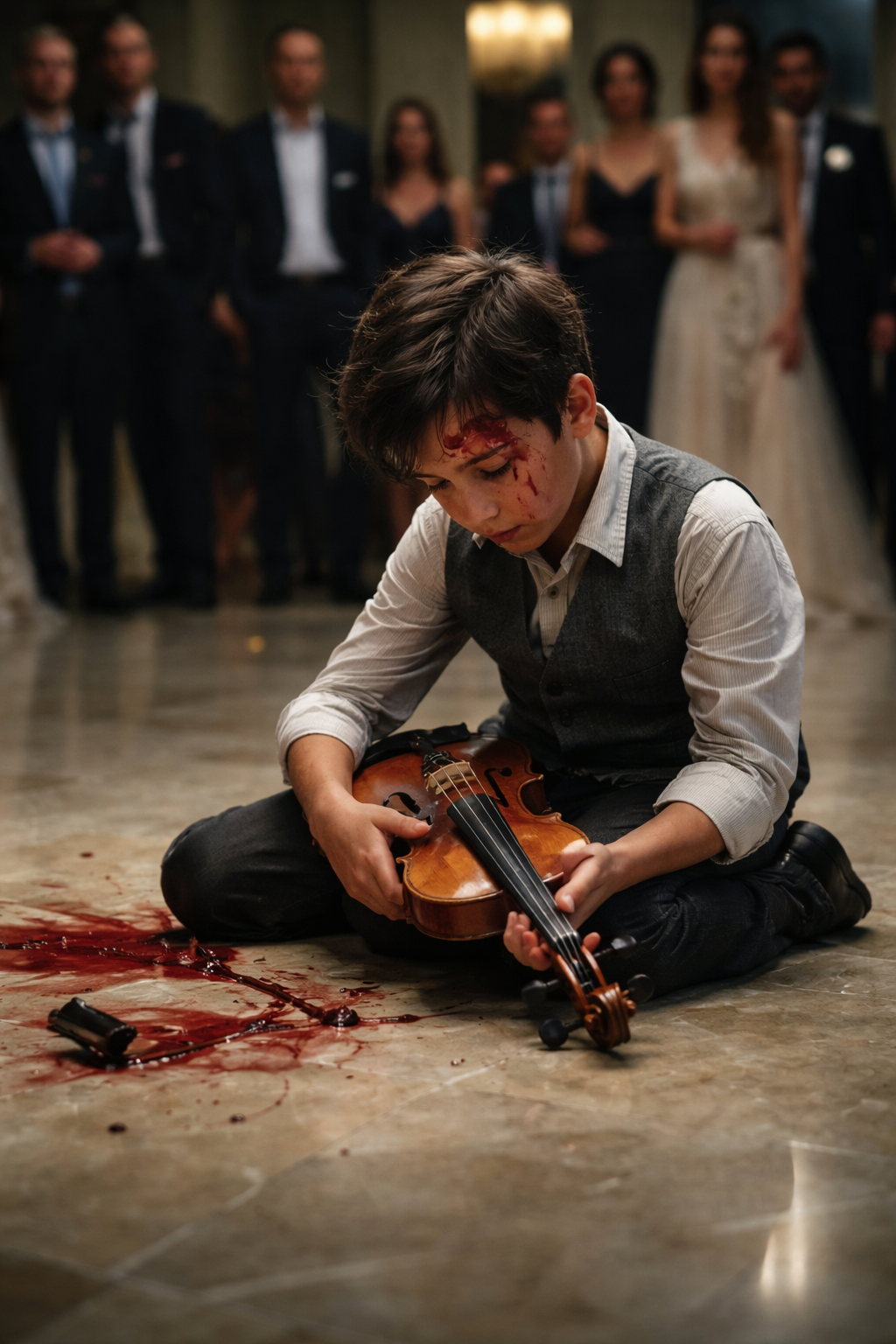
He hadn’t realized it—but she was right. A year later, Elias stood on a stage, violin in hand, performing at a small charity event. He chose the same piece he had played at the wedding. The same moment. The same note. This time, he didn’t falter. Not because he became perfect—but because he no longer believed he had to be. When he finished, the room rose in applause. Elias didn’t look at them. He looked at his mother. In the end, it was never about the bride, the wedding, or the broken violin. It was about a child walking into the wrong room and being treated as if he didn’t matter—only to learn that the room was wrong, not him. And what stayed with him wasn’t the violence, but the truth he carried forward.
“One moment doesn’t decide your worth.”

😱💔 I Married My 22-Year-Old Patient Knowing She Had
😰‼️My Sister’s Husband Brought His Mistress to His

😱💔 At His Graduation Ceremony, My Son Wheeled Me Onto
😱💔 “YOU’RE TOO OLD AND TOO POOR TO RAISE A CHILD!

😱💔 After My Wife Died, I Was Raising Our Six-Week-Old

😱💔 My Daughter Died During Childbirth, and I Raised

😱💔 My Daughter-in-Law Laughed When I Refused to Let